ReentrantLock 原理
https://www.iocoder.cn/JUC/sike/ReentrantLock/
1. 简介
ReentrantLock,可重入锁,是一种递归无阻塞的同步机制。它可以等同于 synchronized 的使用,但是 ReentrantLock 提供了比 synchronized 更强大、灵活的锁机制,可以减少死锁发生的概率。
API 介绍如下:
一个可重入的互斥锁定 Lock,它具有与使用 synchronized 方法和语句所访问的隐式监视器锁定相同的一些基本行为和语义,但功能更强大。
ReentrantLock 将由最近成功获得锁定,并且还没有释放该锁定的线程所拥有。当锁定没有被另一个线程所拥有时,调用 lock 的线程将成功获取该锁定并返回。如果当前线程已经拥有该锁定,此方法将立即返回。可以使用 #isHeldByCurrentThread() 和 #getHoldCount() 方法来检查此情况是否发生。
ReentrantLock 还提供了公平锁和非公平锁的选择,通过构造方法接受一个可选的 fair 参数(默认非公平锁):当设置为 true 时,表示公平锁;否则为非公平锁。
公平锁与非公平锁的区别在于,公平锁的锁获取是有顺序的。但是公平锁的效率往往没有非公平锁的效率高,在许多线程访问的情况下,公平锁表现出较低的吞吐量。
ReentrantLock 整体结构如下图:
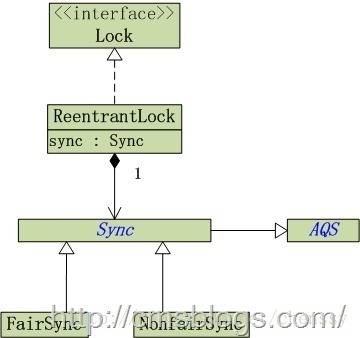
- ReentrantLock 实现 Lock 接口,基于内部的 Sync 实现。
- Sync 实现 AQS ,提供了 FairSync 和 NonFairSync 两种实现。
2. Sync 抽象类
Sync 是 ReentrantLock 的内部静态类,实现 AbstractQueuedSynchronizer 抽象类,同步器抽象类。它使用 AQS 的 state 字段,来表示当前锁的持有数量,从而实现可重入的特性。
2.1 lock
1
2
3
4
5
/**
 * Performs {@link Lock#lock}.
 * The main reason for subclassing is to allow fast path for nonfair version.
 */
abstract void lock();
- 执行锁。抽象了该方法的原因是,允许子类实现快速获得非公平锁的逻辑。
2.2 nonfairTryAcquire
#nonfairTryAcquire(int acquires) 方法,非公平锁的方式获得锁。代码如下:
1
2
3
4
5
6
7
8
9
10
11
12
13
14
15
16
17
18
final boolean nonfairTryAcquire(int acquires) {
    final Thread current = Thread.currentThread();
    int c = getState();
    if (c == 0) {
        if (compareAndSetState(0, acquires)) {
            setExclusiveOwnerThread(current);
            return true;
        }
    } else if (current == getExclusiveOwnerThread()) {
        int nextc = c + acquires;
        if (nextc < 0) {
            throw new Error("Maximum lock count exceeded");
        }
        setState(nextc);
        return true;
    }
    return false;
}
- 该方法主要逻辑:首先判断同步状态 state == 0 ?
- 理论来说,这个方法应该在子类 FairSync 中实现,但是为什么会在这里呢?在下文的 ReentrantLock.tryLock() 中,详细解析。
2.3 tryRelease
#tryRelease(int releases) 实现方法,释放锁。代码如下:
1
2
3
4
5
6
7
8
9
10
11
12
13
protected final boolean tryRelease(int releases) {
    int c = getState() - releases;
    if (Thread.currentThread() != getExclusiveOwnerThread()) {
        throw new IllegalMonitorStateException();
    }
    boolean free = false;
    if (c == 0) {
        free = true;
        setExclusiveOwnerThread(null);
    }
    setState(c);
    return free;
}
- 通过判断判断是否为获得到锁的线程,保证该方法线程安全。
- 只有当同步状态彻底释放后,该方法才会返回 true 。当 state == 0 时,则将锁持有线程设置为 null ,free= true,表示释放成功。
2.4 其他实现方法
其他实现方法比较简单,胖友自己看。
1
2
3
4
5
6
7
8
9
10
11
12
13
14
15
16
17
18
19
20
21
22
23
24
25
26
27
28
29
30
31
32
33
34
35
36
// 是否当前线程独占
@Override
protected final boolean isHeldExclusively() {
    // While we must in general read state before owner,
    // we don't need to do so to check if current thread is owner.
    return getExclusiveOwnerThread() == Thread.currentThread();
}

// 新生成条件
final ConditionObject newCondition() {
    return new ConditionObject();
}

// Methods relayed from outer class
final Thread getOwner() {
    return getState() == 0 ? null : getExclusiveOwnerThread();
}

// 获得当前线程持有锁的数量
final int getHoldCount() {
    return isHeldExclusively() ? getState() : 0;
}

// 是否被锁定
final boolean isLocked() {
    return getState() != 0;
}

/**
 * Reconstitutes the instance from a stream (that is, deserializes it).
 */
private void readObject(java.io.ObjectInputStream s)
        throws java.io.IOException, ClassNotFoundException {
    s.defaultReadObject();
    setState(0);
}
- 从这些方法中,我们可以看到,ReentrantLock 是独占获取同步状态的模式。
3. Sync 实现类
3.1 NonfairSync
NonfairSync 是 ReentrantLock 的内部静态类,实现 Sync 抽象类,非公平锁实现类。
3.1.1 lock
#lock() 实现方法,首先基于 AQS state 进行 CAS 操作,将 0 => 1 。若成功,则获取锁成功。若失败,执行 AQS 的正常的同步状态获取逻辑。代码如下:
1
2
3
4
5
6
7
@Override
final void lock() {
    if (compareAndSetState(0, 1))
        setExclusiveOwnerThread(Thread.currentThread());
    else
        acquire(1);
}
- 优先基于 AQS state 进行 CAS 操作,已经能体现出非公平锁的特点。因为,此时有可能有 N + 1 个线程正在获得锁,其中 1 个线程已经获得到锁,释放的瞬间,恰好被新的线程抢夺到,而不是排队的 N 个线程。
3.1.2 tryAcquire
#tryAcquire(int acquires) 实现方法,非公平的方式,获得同步状态。代码如下:
1
2
3
protected final boolean tryAcquire(int acquires) {
    return nonfairTryAcquire(acquires);
}
- 用 #nonfairTryAcquire(int acquires) 方法,非公平锁的方式获得锁。
3.2 FairSync
FairSync 是 ReentrantLock 的内部静态类,实现 Sync 抽象类,公平锁实现类。
3.2.1 lock
#lock() 实现方法,代码如下:
1
2
3
final void lock() {
    acquire(1);
}
- 直接执行 AQS 的正常的同步状态获取逻辑。
3.2.2 tryAcquire
#tryAcquire(int acquires) 实现方法,公平的方式,获得同步状态。代码如下:
1
2
3
4
5
6
7
8
9
10
11
12
13
14
15
16
17
18
protected final boolean tryAcquire(int acquires) {
    final Thread current = Thread.currentThread();
    int c = getState();
    if (c == 0) {
        if (!hasQueuedPredecessors() &&
                compareAndSetState(0, acquires)) {
            setExclusiveOwnerThread(current);
            return true;
        }
    } else if (current == getExclusiveOwnerThread()) {
        int nextc = c + acquires;
        if (nextc < 0)
            throw new Error("Maximum lock count exceeded");
        setState(nextc);
        return true;
    }
    return false;
}
比较非公平锁和公平锁获取同步状态的过程,会发现两者唯一的区别就在于,公平锁在获取同步状态时多了一个限制条件 #hasQueuedPredecessors() 方法,是否有前序节点,即自己不是首个等待获取同步状态的节点。代码如下:
1
2
3
4
5
6
7
8
// AbstractQueuedSynchronizer.java
public final boolean hasQueuedPredecessors() {
    Node t = tail; // 尾节点
    Node h = head; // 头节点
    Node s;
    // 头节点 != 尾节点 //同步队列第一个节点不为null //当前线程是同步队列第一个节点
    return h != t && ((s = h.next) == null || s.thread != Thread.currentThread());
}
- 该方法主要做一件事情:主要是判断当前线程是否位于 CLH 同步队列中的第一个。如果是则返回 true ,否则返回 false 。
4. Lock 接口
java.util.concurrent.locks.Lock 接口,定义方法如下:
1
2
3
4
5
6
void lock();
void lockInterruptibly() throws InterruptedException;
boolean tryLock();
boolean tryLock(long time, TimeUnit unit) throws InterruptedException;
void unlock();
Condition newCondition();
- 每个方法解释如下图:FROM 《Java并发编程的艺术》的 「5.1 Lock 接口」 章节。

5. ReentrantLock
java.util.concurrent.locks.ReentrantLock ,实现 Lock 接口,重入锁。
ReentrantLock 的实现方法,基本是对 Sync 的调用。
5.1 构造方法
1
2
3
4
5
6
7
public ReentrantLock() {
    sync = new NonfairSync();
}

public ReentrantLock(boolean fair) {
    sync = fair ? new FairSync() : new NonfairSync();
}
- 基于 fair 参数,创建 FairSync 还是 NonfairSync 对象。
5.2 lock
1
2
3
4
@Override
public void lock() {
    sync.lock();
}
5.3 lockInterruptibly
1
2
3
4
@Override
public void lockInterruptibly() throws InterruptedException {
    sync.acquireInterruptibly(1);
}
5.4 tryLock
1
2
3
4
5
6
7
8
9
10
11
12
13
14
15
16
17
18
19
20
21
22
23
24
25
26
27
28
29
30
/**
 * Acquires the lock only if it is not held by another thread at the time
 * of invocation.
 *
 * <p>Acquires the lock if it is not held by another thread and
 * returns immediately with the value {@code true}, setting the
 * lock hold count to one. Even when this lock has been set to use a
 * fair ordering policy, a call to {@code tryLock()} <em>will</em>
 * immediately acquire the lock if it is available, whether or not
 * other threads are currently waiting for the lock.
 * This "barging" behavior can be useful in certain
 * circumstances, even though it breaks fairness. If you want to honor
 * the fairness setting for this lock, then use
 * {@link #tryLock(long, TimeUnit) tryLock(0, TimeUnit.SECONDS) }
 * which is almost equivalent (it also detects interruption).
 *
 * <p>If the current thread already holds this lock then the hold
 * count is incremented by one and the method returns {@code true}.
 *
 * <p>If the lock is held by another thread then this method will return
 * immediately with the value {@code false}.
 *
 * @return {@code true} if the lock was free and was acquired by the
 *         current thread, or the lock was already held by the current
 *         thread; and {@code false} otherwise
 */
@Override
public boolean tryLock() {
    return sync.nonfairTryAcquire(1);
}
- 详细的说明,胖友可以看上面的英文注释。
- 老艿艿的简单理解是:
5.5 tryLock
1
2
3
4
@Override
public boolean tryLock(long timeout, TimeUnit unit) throws InterruptedException {
    return sync.tryAcquireNanos(1, unit.toNanos(timeout));
}
5.6 unlock
1
2
3
4
@Override
public void unlock() {
    sync.release(1);
}
5.7 newCondition
1
2
3
4
@Override
public Condition newCondition() {
    return sync.newCondition();
}
5.8 其他实现方法
其他实现方法比较简单,胖友自己看。
1
2
3
4
5
6
7
8
9
10
11
12
13
14
15
16
17
18
19
20
21
22
23
24
25
26
27
28
29
30
31
32
33
34
35
36
37
38
39
40
41
42
43
44
45
46
47
48
49
50
51
52
53
54
55
56
public int getHoldCount() {
    return sync.getHoldCount();
}

public boolean isHeldByCurrentThread() {
    return sync.isHeldExclusively();
}

public boolean isLocked() {
    return sync.isLocked();
}

public final boolean isFair() {
    return sync instanceof FairSync;
}

protected Thread getOwner() {
    return sync.getOwner();
}

public final boolean hasQueuedThreads() {
    return sync.hasQueuedThreads();
}

public final boolean hasQueuedThread(Thread thread) {
    return sync.isQueued(thread);
}

public final int getQueueLength() {
    return sync.getQueueLength();
}

protected Collection<Thread> getQueuedThreads() {
    return sync.getQueuedThreads();
}

public boolean hasWaiters(Condition condition) {
    if (condition == null) throw new NullPointerException();
    if (!(condition instanceof AbstractQueuedSynchronizer.ConditionObject))
        throw new IllegalArgumentException("not owner");
    return sync.hasWaiters((AbstractQueuedSynchronizer.ConditionObject) condition);
}

public int getWaitQueueLength(Condition condition) {
    if (condition == null) throw new NullPointerException();
    if (!(condition instanceof AbstractQueuedSynchronizer.ConditionObject))
        throw new IllegalArgumentException("not owner");
    return sync.getWaitQueueLength((AbstractQueuedSynchronizer.ConditionObject) condition);
}

protected Collection<Thread> getWaitingThreads(Condition condition) {
    if (condition == null) throw new NullPointerException();
    if (!(condition instanceof AbstractQueuedSynchronizer.ConditionObject))
        throw new IllegalArgumentException("not owner");
    return sync.getWaitingThreads((AbstractQueuedSynchronizer.ConditionObject) condition);
}
6. ReentrantLock 与 synchronized 的区别
前面提到 ReentrantLock 提供了比 synchronized 更加灵活和强大的锁机制,那么它的灵活和强大之处在哪里呢?他们之间又有什么相异之处呢?
首先他们肯定具有相同的功能和内存语义。
- 与 synchronized 相比,ReentrantLock提供了更多,更加全面的功能,具备更强的扩展性。例如:时间锁等候,可中断锁等候,锁投票。
- ReentrantLock 还提供了条件 Condition ,对线程的等待、唤醒操作更加详细和灵活,所以在多个条件变量和高度竞争锁的地方,ReentrantLock 更加适合(以后会阐述Condition)。
- ReentrantLock 提供了可轮询的锁请求。它会尝试着去获取锁,如果成功则继续,否则可以等到下次运行时处理,而 synchronized 则一旦进入锁请求要么成功要么阻塞,所以相比 synchronized 而言,ReentrantLock会不容易产生死锁些。
- ReentrantLock 支持更加灵活的同步代码块,但是使用 synchronized 时,只能在同一个 synchronized 块结构中获取和释放。注意,ReentrantLock 的锁释放一定要在 finally 中处理,否则可能会产生严重的后果。
- ReentrantLock 支持中断处理,且性能较 synchronized 会好些。
参考资料
- Doug Lea:《Java并发编程实战》
- 方腾飞:《Java并发编程的艺术》的 「5.1 Lock 接口」 和 「5.3 重入锁」 章节
- 《【JUC】JDK 1.8 源码分析之 ReentrantLock(三)》