过滤器(二)之ContextFilter
本文基于 Dubbo 2.6.1 版本,望知悉。
1. 概述
本文分享 RpcContext 相关过滤器,包括两个:
- ConsumerContextFilter :在服务消费者发起调用时中使用,负责初始化 RpcContext 。
- ContextFilter :在服务提供者被调用时中使用,负责初始化 RpcContext 。
2. RpcContext
RpcContext,上下文信息。在 《Dubbo 用户指南 —— 上下文信息》 ,定义如下:
上下文中存放的是当前调用过程中所需的环境信息。所有配置信息都将转换为 URL 的参数,参见 schema 配置参考手册 中的对应URL参数一列。
RpcContext 是一个 ThreadLocal 的临时状态记录器,当接收到 RPC 请求,或发起 RPC 请求时,RpcContext 的状态都会变化。比如:A 调 B,B 再调 C,则 B 机器上,
- 在 B 调 C 之前,RpcContext 记录的是 A 调 B 的信息,
- 在 B 调 C 之后,RpcContext 记录的是 B 调 C 的信息。
- RpcContext 在调用时的状态变化,有点绕,下面我们看具体的 Filter 实现,就相对容易明白列。
com.alibaba.dubbo.rpc.RpcContext ,代码如下:
1
2
3
4
5
6
7
8
9
10
11
12
13
14
15
16
17
18
19
20
21
22
23
24
25
26
27
28
29
30
31
32
33
34
35
36
37
38
39
40
41
42
43
44
45
46
47
48
49
50
51
52
53
54
55
56
57
58
59
60
61
62
63
64
65
66
67
68
69
70
/**
 * RpcContext 线程变量
 */
private static final ThreadLocal<RpcContext> LOCAL = new ThreadLocal<RpcContext>() {
    @Override
    protected RpcContext initialValue() {
        return new RpcContext();
    }
};

/**
 * 隐式参数集合
 */
private final Map<String, String> attachments = new HashMap<String, String>();
// 实际未使用
private final Map<String, Object> values = new HashMap<String, Object>();
/**
 * 异步调用 Future
 */
private Future<?> future;
/**
 * 可调用服务的 URL 对象集合
 */
private List<URL> urls;
/**
 * 调用服务的 URL 对象
 */
private URL url;
/**
 * 方法名
 */
private String methodName;
/**
 * 参数类型数组
 */
private Class<?>[] parameterTypes;
/**
 * 参数值数组
 */
private Object[] arguments;
/**
 * 服务消费者地址
 */
private InetSocketAddress localAddress;
/**
 * 服务提供者地址
 */
private InetSocketAddress remoteAddress;

@Deprecated // DUBBO-325 废弃的,使用 urls 属性替代
private List<Invoker<?>> invokers;
@Deprecated // DUBBO-325 废弃的,使用 url 属性替代
private Invoker<?> invoker;
@Deprecated // DUBBO-325 废弃的,使用 methodName、parameterTypes、arguments 属性替代
private Invocation invocation;

/**
 * 请求
 *
 * 例如,在 RestProtocol
 */
private Object request;
/**
 * 响应
 *
 * 例如,在 RestProtocol
 */
private Object response;

// ... 省略一些
- LOCAL 静态属性,RpcContext 纯程变量。初始获得时,返回新的 RpcContext 对象。
- attachments 属性,隐式参数集合。
- 例如,我们在 PRC 调用前,可在业务代码里添加一些想要传递给服务的参数到该属性
- 又例如,在分布式链路追踪时,添加链路追踪编号到该属性种。
- 《Dubbo 用户指南 —— 隐式参数》
- future 属性,异步调用 Future 对象,在 《精尽 Dubbo 源码分析 —— 服务调用(三)之远程调用(Dubbo)【3】异步调用》 有详细使用的代码分享。
- 【替代 invokers 属性】
- urls 属性,可调用的服务的 URL 对象集合,在集群容错模块实现。
- 【替代 invoker 属性】
- url 属性,调用的服务的 URL 对象。
- 【替代 invocation 属性】
- methodName 属性,调用的方法名。
- parameterTypes 属性,调用的参数类型数组。
- arguments 属性,调用的参数值数组。
- 地址
- localAddress 属性, 服务消费者地址。
- remoteAddress 属性,服务提供者地址。
- request、response 属性,请求和响应。例如,在 RestProtocol 中使用,代表 HTTP Request 和 Response 对象,在 RpcContextFilter 中设置,如下图所示:
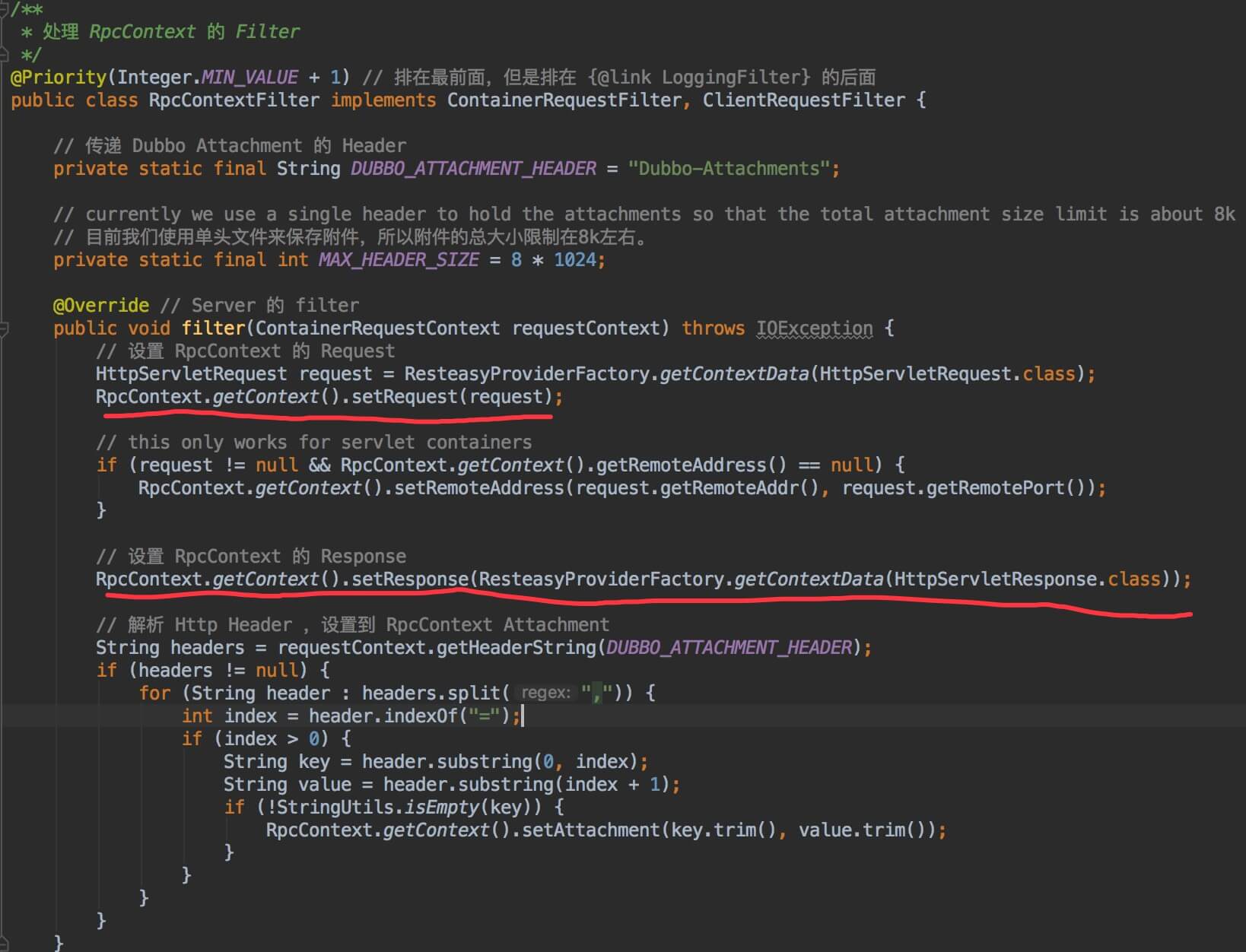
- 我们可以看到 request、response 的类型是 Object 类。通过这种形式,可以不仅仅适用于 HTTP 的场景。
RpcContext 中,有很多方法,比较易懂,胖友自己查看噢。
3. ConsumerContextFilter
com.alibaba.dubbo.rpc.filter.ConsumerContextFilter ,实现 Filter 接口,服务消费者的 ContextFilter 实现类。
1
2
3
4
5
6
7
8
9
10
11
12
13
14
15
16
17
18
19
20
21
22
23
24
25
@Activate(group = Constants.CONSUMER, order = -10000)
public class ConsumerContextFilter implements Filter {

    @Override
    public Result invoke(Invoker<?> invoker, Invocation invocation) throws RpcException {
        // 设置 RpcContext 对象
        RpcContext.getContext()
                .setInvoker(invoker)
                .setInvocation(invocation)
                .setLocalAddress(NetUtils.getLocalHost(), 0) // 本地地址
                .setRemoteAddress(invoker.getUrl().getHost(), invoker.getUrl().getPort()); // 远程地址
        // 设置 RpcInvocation 对象的 `invoker` 属性
        if (invocation instanceof RpcInvocation) {
            ((RpcInvocation) invocation).setInvoker(invoker);
        }
        // 服务调用
        try {
            return invoker.invoke(invocation);
        } finally {
            // 清理隐式参数集合
            RpcContext.getContext().clearAttachments();
        }
    }

}
- 第 6 至 11 行:设置 RpcContext 对象。
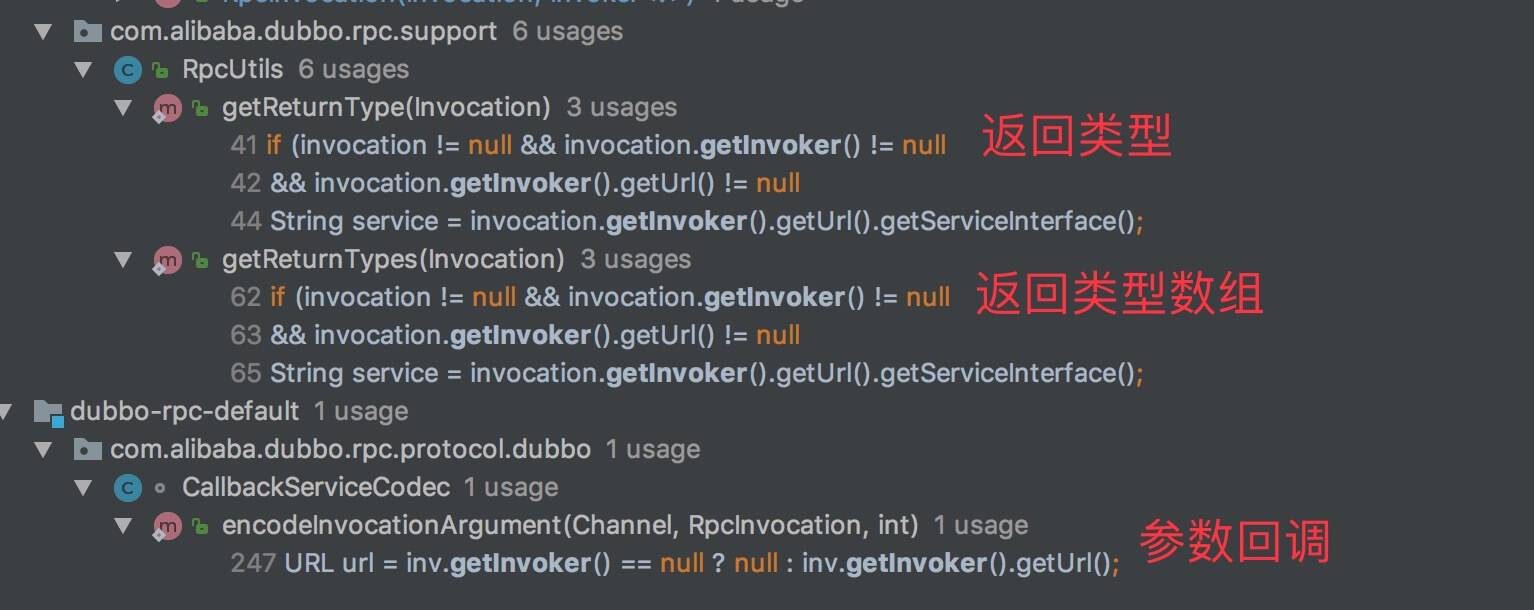
- 第 12 至 15 行:设置 RpcInvocation 对象的 invoker 属性。该属性,目前使用在如下图的场景:
- 第 18 行:调用 Invoker#invoke(invocation) 方法,服务调用。
- 第 19 至 22 行:调用 RpcContext#clearAttachments() 方法,清理隐式参数集合。所以,每次都会被清理(注意,每次!!!)服务调用完成,RpcContext 设置的隐式参数!代码如下:
1
2
3
public void clearAttachments() {
    this.attachments.clear();
}
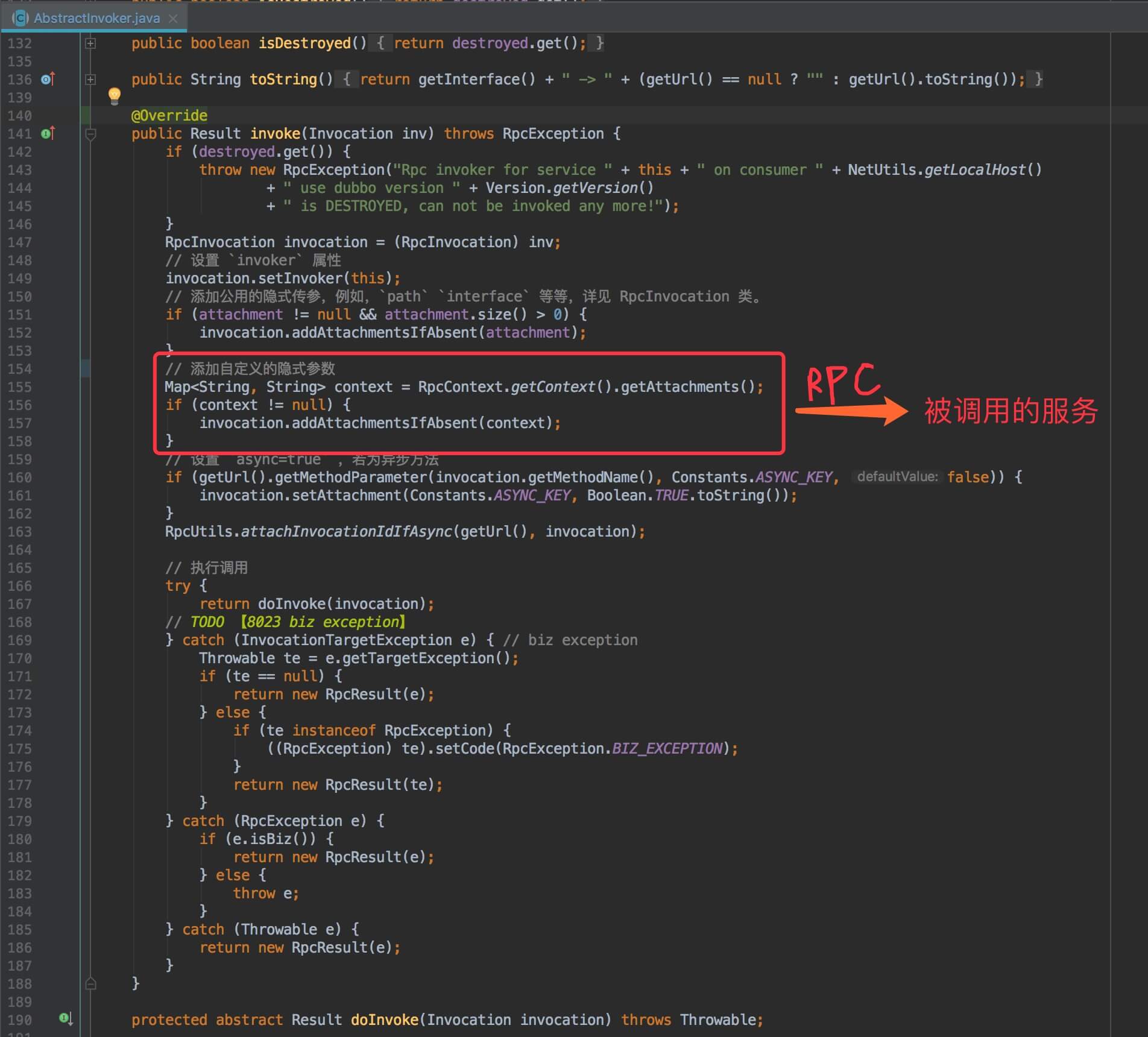
看到此处,RpcContext.attachments 属性,是如何传递给被调用的服务的呢?答案在下图:
4. ContextFilter
com.alibaba.dubbo.rpc.filter.ContextFilter ,实现 Filter 接口,服务提供者的 ContextFilter 实现类。
1
2
3
4
5
6
7
8
9
10
11
12
13
14
15
16
17
18
19
20
21
22
23
24
25
26
27
28
29
30
31
32
33
34
35
36
37
38
39
40
41
42
43
44
45
46
47
48
@Activate(group = Constants.PROVIDER, order = -10000)
public class ContextFilter implements Filter {

    @Override
    public Result invoke(Invoker<?> invoker, Invocation invocation) throws RpcException {
        // 创建新的 `attachments` 集合,清理公用的隐式参数
        Map<String, String> attachments = invocation.getAttachments();
        if (attachments != null) {
            attachments = new HashMap<String, String>(attachments);
            attachments.remove(Constants.PATH_KEY);
            attachments.remove(Constants.GROUP_KEY);
            attachments.remove(Constants.VERSION_KEY);
            attachments.remove(Constants.DUBBO_VERSION_KEY);
            attachments.remove(Constants.TOKEN_KEY);
            attachments.remove(Constants.TIMEOUT_KEY);
            attachments.remove(Constants.ASYNC_KEY); // Remove async property to avoid being passed to the following invoke chain.
                                                     // 清空消费端的异步参数
        }
        // 设置 RpcContext 对象
        RpcContext.getContext()
                .setInvoker(invoker)
                .setInvocation(invocation)
//                .setAttachments(attachments)  // merged from dubbox
                .setLocalAddress(invoker.getUrl().getHost(), invoker.getUrl().getPort());
        // mreged from dubbox
        // we may already added some attachments into RpcContext before this filter (e.g. in rest protocol)
        // 在此过滤器(例如rest协议)之前,我们可能已经在RpcContext中添加了一些附件。
        if (attachments != null) {
            if (RpcContext.getContext().getAttachments() != null) {
                RpcContext.getContext().getAttachments().putAll(attachments);
            } else {
                RpcContext.getContext().setAttachments(attachments);
            }
        }
        // 设置 RpcInvocation 对象的 `invoker` 属性
        if (invocation instanceof RpcInvocation) {
            ((RpcInvocation) invocation).setInvoker(invoker);
        }
        // 服务调用
        try {
            return invoker.invoke(invocation);
        } finally {
            // 移除上下文
            RpcContext.removeContext();
        }
    }

}
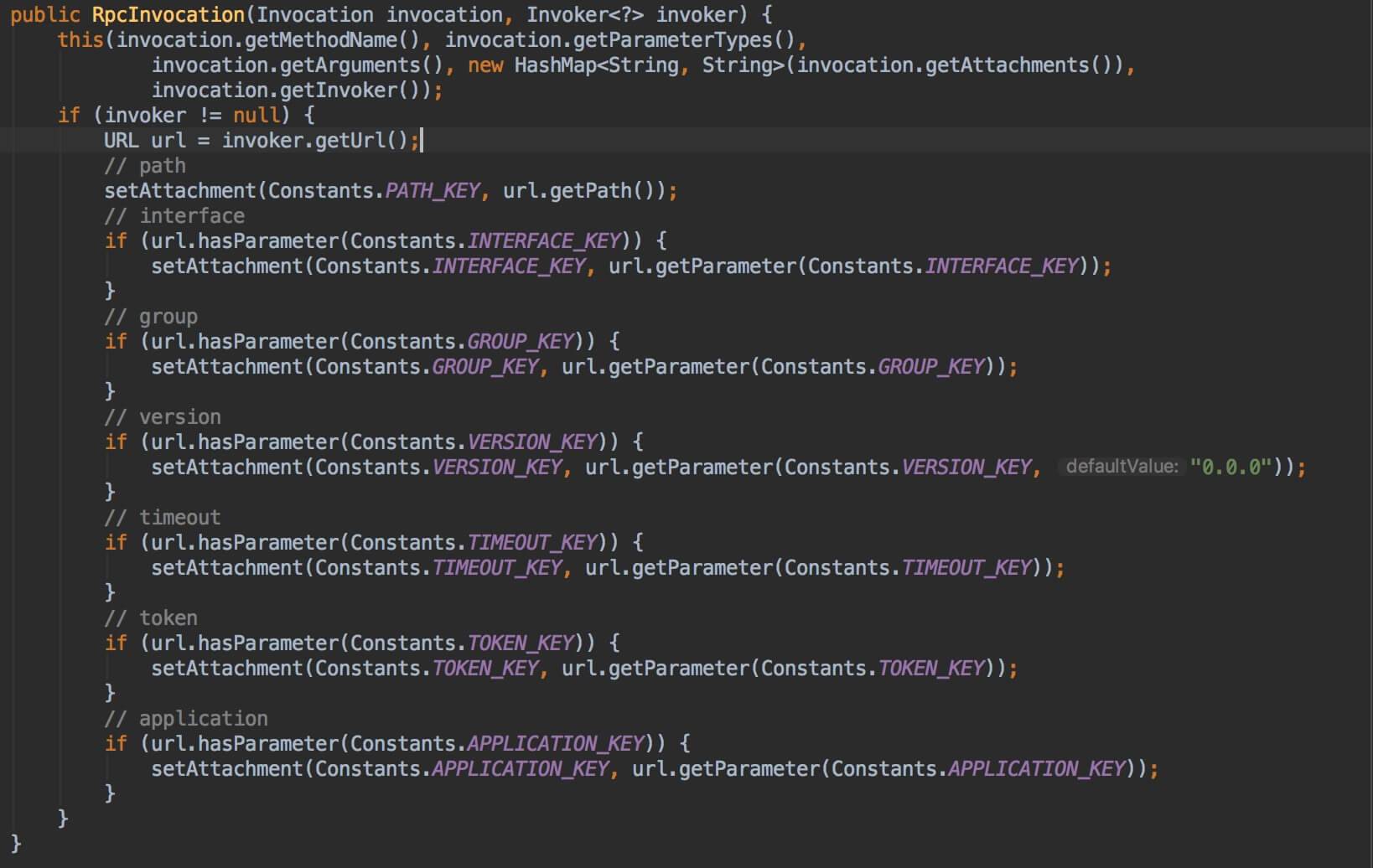
- 第 6 至 18 行:创建新的 attachments 集合,因为要清理公用的隐式参数。该公用的隐式参数,设置的地方,如下图所示:
- 第 19 至 24 行:设置 RpcContext 对象。
- 第 25 至 34 行:在此过滤器( 例如 RestProtocol 的 RpcContextFilter )之前,我们可能已经在 RpcContext 中添加了一些隐式参数。
- 第 35 至 38 行:调用 Invoker#invoke(invocation) 方法,服务调用。
- 第 41 行:调用 Invoker#invoke(invocation) 方法,服务调用。
- 第 42 至 45 行:调用 RpcContext#removeContext() 方法,移除上下文。代码如下:
1
2
3
public static void removeContext() {
    LOCAL.remove();
}
5. RpcContext.values
我们在回过头来看 RpcContext.values 属性。目前 Dubbo 中,并未使用它。
从代码看下来,如果我们希望有多次 Dubbo 调用,共享参数,并且不被 ConsumerContextFilter 清理隐式参数,笔者觉得可以使用该 values 属性。
和 value 属性相关的方法如下:
1
2
3
4
5
6
7
8
9
10
11
12
13
14
15
16
17
18
19
20
21
public Map<String, Object> get() {
    return values;
}

public RpcContext set(String key, Object value) {
    if (value == null) {
        values.remove(key);
    } else {
        values.put(key, value);
    }
    return this;
}

public RpcContext remove(String key) {
    values.remove(key);
    return this;
}

public Object get(String key) {
    return values.get(key);
}
当然,如果同时我们希望一些通用的 values 传递给被调用的服务,可以实现一个 Filter ,简化代码如下:
1
RpcContext.getContext().setAttachment("key1", RpcContext.getContext().get("key2").toString());
恩,还是当然,在业务代码里,也可以这么调用。
666. 彩蛋
美滋滋,梳理干净了。