服务调用(五)之远程调用(WebService)
本文基于 Dubbo 2.6.1 版本,望知悉。
1. 概述
本文,我们分享 webservice:// 协议的远程调用,主要分成三个部分:
- 服务暴露
- 服务引用
- 服务调用
对应项目为 dubbo-rpc-webservice 。
对应文档为 《Dubbo 用户指南 —— webservice://》 。定义如下:
基于 WebService 的远程调用协议,基于 Apache CXF 的 frontend-simple 和 transports-http 实现。
可以和原生 WebService 服务互操作,即:
- 提供者用 Dubbo 的 WebService 协议暴露服务,消费者直接用标准 WebService 接口调用,
- 或者提供方用标准 WebService 暴露服务,消费方用 Dubbo 的 WebService 协议调用。
本文涉及类图(红圈部分)如下:
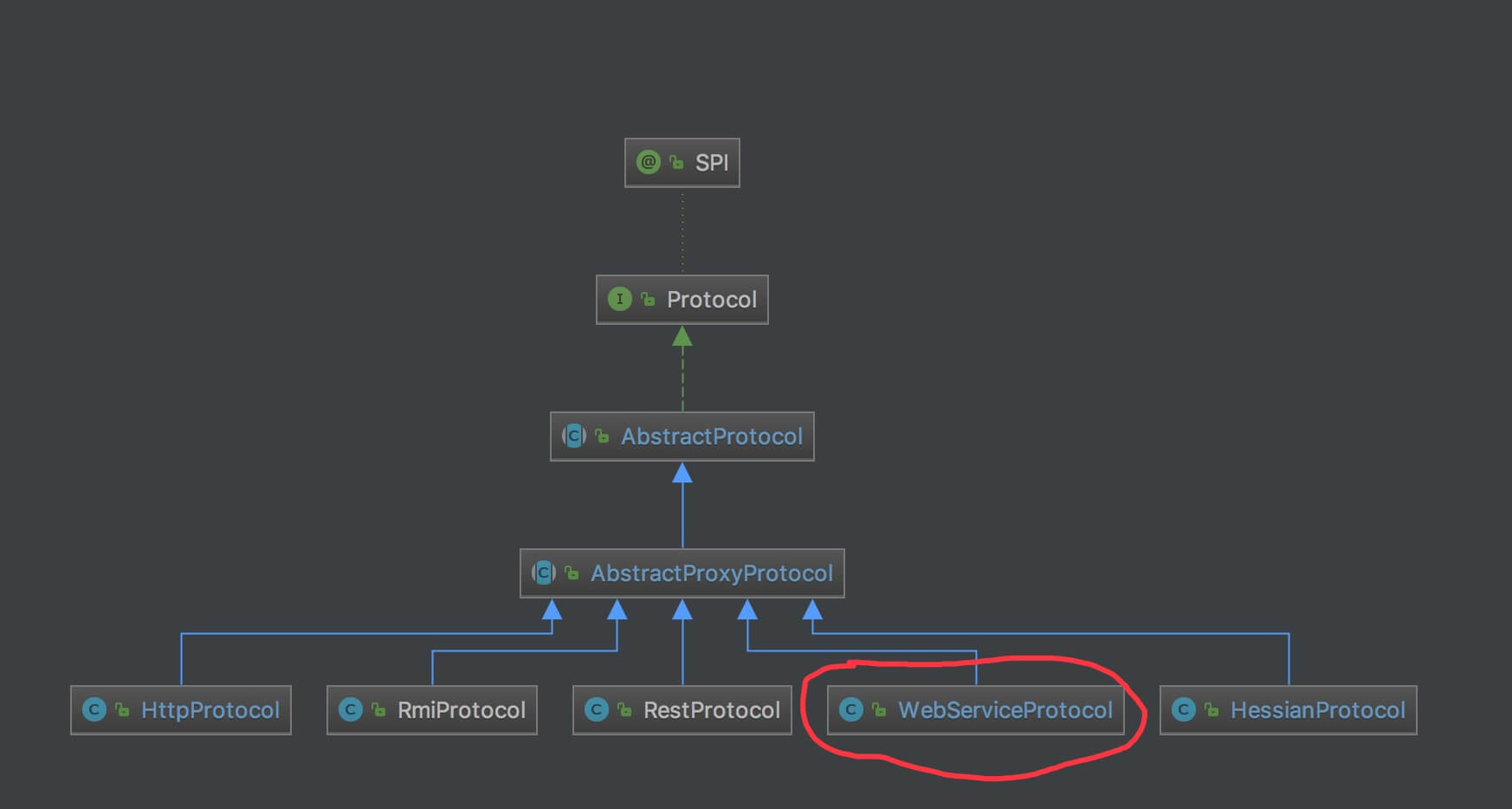
类图
旁白君:整体实现和 dubbo-rpc-http 一致,所以内容上和 《精尽 Dubbo 源码分析 —— 服务调用(三)之远程调用(HTTP)》 差不多。
2. WebServiceProtocol
com.alibaba.dubbo.rpc.protocol.webservice.WebServiceProtocol ,实现 AbstractProxyProtocol 抽象类,webservice:// 协议实现类。
2.1 构造方法
```plain text plain /** * 默认服务器端口 */ public static final int DEFAULT_PORT = 80; /** * Http 服务器集合 * * key:ip:port */ private final Map<String, HttpServer> serverMap = new ConcurrentHashMap<String, HttpServer>(); /** * 《我眼中的CXF之Bus》http://jnn.iteye.com/blog/94746 * 《CXF BUS》https://blog.csdn.net/chen_fly2011/article/details/56664908 */ private final ExtensionManagerBus bus = new ExtensionManagerBus(); /** * */ private final HTTPTransportFactory transportFactory = new HTTPTransportFactory(); /** * HttpBinder$Adaptive 对象 */ private HttpBinder httpBinder; public WebServiceProtocol() { super(Fault.class); bus.setExtension(new ServletDestinationFactory(), HttpDestinationFactory.class); } public void setHttpBinder(HttpBinder httpBinder) { this.httpBinder = httpBinder; }
1
2
3
4
5
6
7
8
9
10
11
12

---

- serverMap
属性,HttpServer 集合。键为
ip:port
,通过
#getAddr(url)
方法,计算。代码如下:

```plain text
plain // AbstractProxyProtocol.java protected String getAddr(URL url) {     String bindIp = url.getParameter(Constants.BIND_IP_KEY, url.getHost());     if (url.getParameter(Constants.ANYHOST_KEY, false)) {         bindIp = Constants.ANYHOST_VALUE;     }     return NetUtils.getIpByHost(bindIp) + ":" + url.getParameter(Constants.BIND_PORT_KEY, url.getPort()); }
- skeletonMap 属性, com.caucho.hessian.server.HessianSkeleton 集合。请求处理过程为 HttpServer => DispatcherServlet => WebServiceHandler => ServletController 。
- httpBinder 属性,HttpBinder$Adaptive 对象,通过 #setHttpBinder(httpBinder) 方法,Dubbo SPI 调用设置。
- rpcExceptions = Fault.class 。
- bus 和 transportFactory 属性,可以参看如下文章:
- 艿艿对 Apache CXF 了解不多,所以本文更多梳理好整体脉络。
2.2 doExport
```plain text plain 1: @Override 2: protected
1
2
3
4
5
6
7
8
9
10
11
12
13
14
15
16
17
18
19
20
21
22

---

- 基于 **通信服务器**
dubbo-remoting-http
项目,作为
。
- 第 4 行:调用
#getAddr(url)
方法,获得服务器地址。
- 第 5 至 10 行:从
serverMap
中,获得 HttpServer 对象。若不存在,调用
HttpBinder#bind(url, handler)
方法,创建 HttpServer 对象。此处使用的 WebServiceHandler ,下文详细解析。
- 第 11 至 18 行:创建 ServerFactoryBean 对象。
- 第 19 至 24 行:返回取消暴露的回调 Runnable 对象。

### 2.2.1 WebServiceHandler

```plain text
plain private class WebServiceHandler implements HttpHandler {      private volatile ServletController servletController;      @Override     public void handle(HttpServletRequest request, HttpServletResponse response) throws IOException, ServletException {         // 创建 ServletController 对象,设置使用 DispatcherServlet 。         if (servletController == null) {             HttpServlet httpServlet = DispatcherServlet.getInstance();             if (httpServlet == null) {                 response.sendError(500, "No such DispatcherServlet instance.");                 return;             }             synchronized (this) {                 if (servletController == null) {                     servletController = new ServletController(transportFactory.getRegistry(), httpServlet.getServletConfig(), httpServlet);                 }             }         }         // 设置调用方地址         RpcContext.getContext().setRemoteAddress(request.getRemoteAddr(), request.getRemotePort());         // 执行调用         servletController.invoke(request, response);     }  }
2.3 doRefer
```plain text plain 1: @Override 2: @SuppressWarnings(“unchecked”) 3: protected
1
2
3
4
5
6
7
8
9
10
11
12

---

- 第 4 至 8 行:创建 ClientProxyFactoryBean 对象。
- 第 10 行:创建 Service Proxy 对象。
- 第 11 至 17 行:设置**超时相关**
属性。

### 2.3.1 getErrorCode

```plain text
plain @Override protected int getErrorCode(Throwable e) {     if (e instanceof Fault) {         e = e.getCause();     }     if (e instanceof SocketTimeoutException) {         return RpcException.TIMEOUT_EXCEPTION;     } else if (e instanceof IOException) {         return RpcException.NETWORK_EXCEPTION;     }     return super.getErrorCode(e); }
- 将异常,翻译成 Dubbo 异常码。
666. 彩蛋

知识星球
水水的一篇更新,嘿嘿嘿。