动态编译(一)之Javassist
本文基于 Dubbo 2.6.1 版本,望知悉。
1. 概述
在 Java 语言中,大多数情况下,我们已经编写好 Java 类,并编译成 Class 文件进行运行。但是在一些场景下,例如动态代理,需要运用到动态编译的技术。虽然我们也可以用反射的技术实现,但是相比来说,还是有一定的性能差距。
例如,在 《精尽 Dubbo 源码分析 —— 拓展机制 SPI》 的 「4.5.4 createAdaptiveExtensionClassCode」 小节中,我们可以看到如下代码:
1
2
3
4
5
6
7
8
9
10
11
12
13
/**
 * 自动生成自适应拓展的代码实现,并编译后返回该类。
 *
 * @return 类
 */
private Class<?> createAdaptiveExtensionClass() {
    // 自动生成自适应拓展的代码实现的字符串
    String code = createAdaptiveExtensionClassCode();
    // 编译代码,并返回该类
    ClassLoader classLoader = findClassLoader();
    com.alibaba.dubbo.common.compiler.Compiler compiler = ExtensionLoader.getExtensionLoader(com.alibaba.dubbo.common.compiler.Compiler.class).getAdaptiveExtension();
    return compiler.compile(code, classLoader);
}
调用 Compiler#compile(code, classLoader) 方法,编译代码,并返回该类。Compiler 基于 Dubbo SPI 机制进行加载,目前有两种实现:
- JdkCompiler
1
<dubbo:application compiler="jdk" />
- JavassistCompiler
1
<dubbo:application compiler="javassist" />
缺省使用 JavassistCompiler。
本文仅分享 JavassistCompiler 的实现。
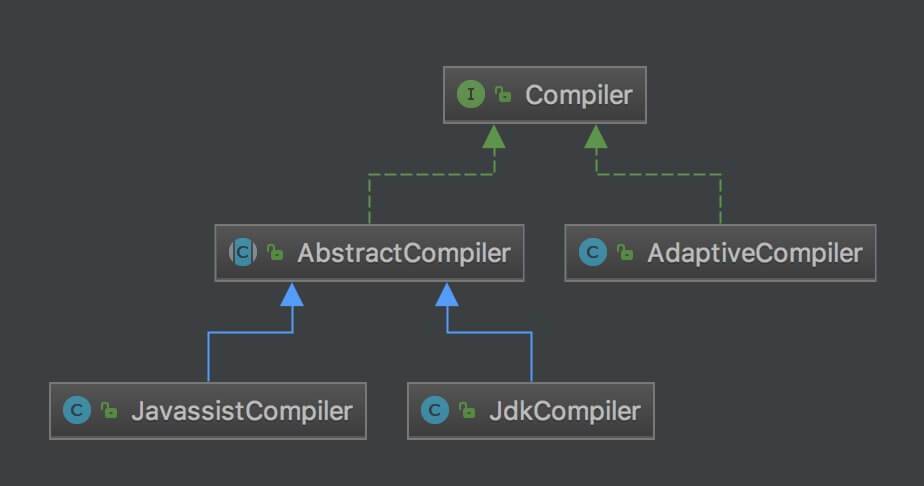
动态编译,在 dubbo-common 模块的 compiler 包下实现,整体类结构如下图:
2. Compiler
com.alibaba.dubbo.common.compiler.Compiler,编辑器接口。代码如下:
1
2
3
4
5
6
7
8
9
10
11
12
13
14
15
16
17
18
@SPI("javassist")
public interface Compiler {

    /**
     * Compile java source code.
     *
     * 编译 Java 代码字符串
     *
     * @param code        Java source code
     *                    Java 代码字符串
     * @param classLoader classloader
     *                    类加载器
     * @return Compiled class
     *                    编译后的类
     */
    Class<?> compile(String code, ClassLoader classLoader);

}
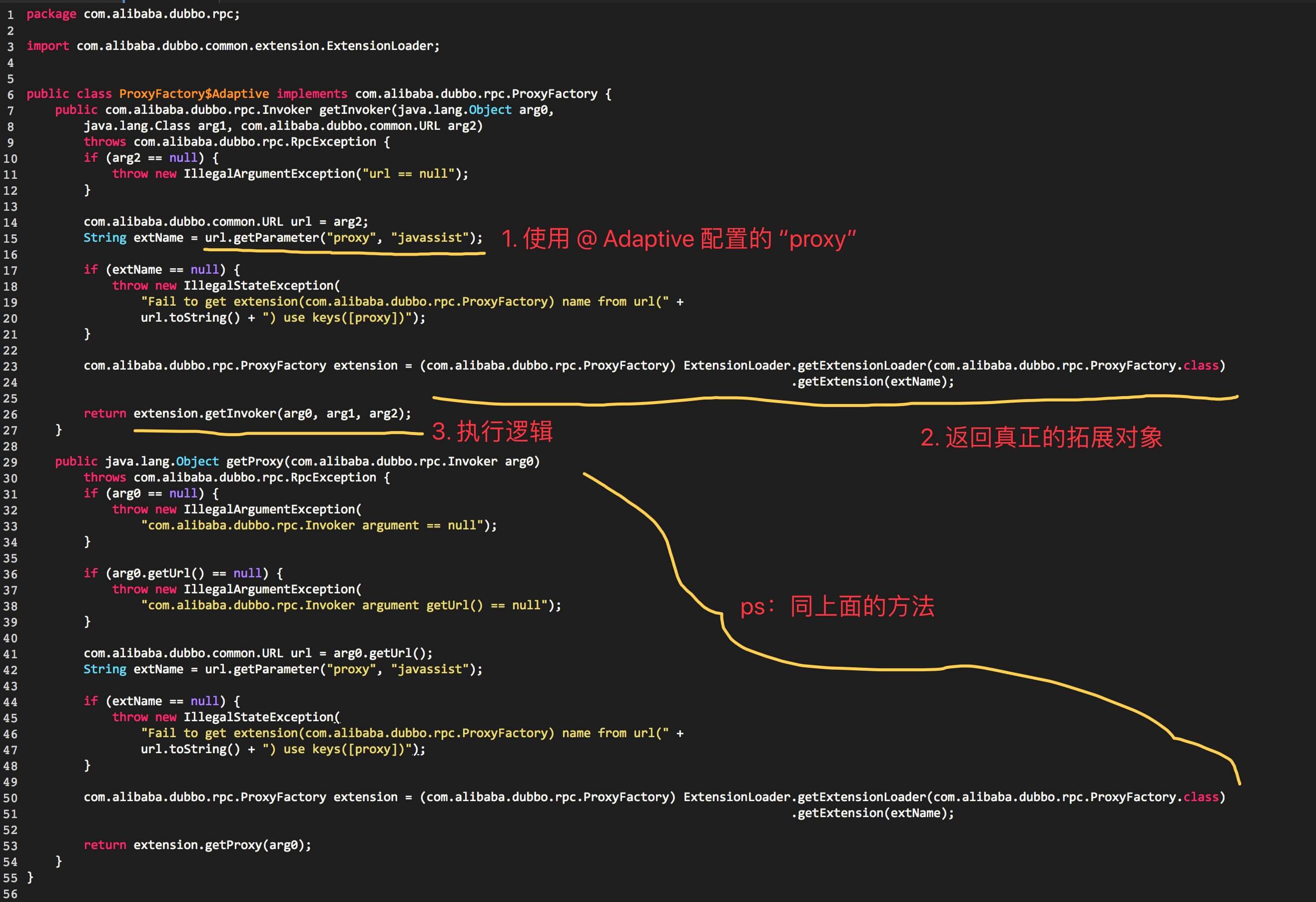
@SPI("javassist")注解,使用 Dubbo SPI 机制,默认拓展为 Javassist。code参数,Java 代码字符串。如下是 ProxyFactory$Adaptive 的自适应拓展的代码实现的字符串生成例子:
3. AdaptiveCompiler
com.alibaba.dubbo.common.compiler.support.AdaptiveCompiler,实现 Compiler 接口,自适应 Compiler 实现类。
1
2
3
4
5
6
7
8
9
10
11
12
13
14
15
16
17
18
19
20
21
22
23
24
25
26
27
28
29
30
@Adaptive
public class AdaptiveCompiler implements Compiler {

    /**
     * 默认编辑器的拓展名
     */
    private static volatile String DEFAULT_COMPILER;

    public static void setDefaultCompiler(String compiler) {
        DEFAULT_COMPILER = compiler;
    }

    @Override
    public Class<?> compile(String code, ClassLoader classLoader) {
        Compiler compiler;
        // 获得 Compiler 的 ExtensionLoader 对象。
        ExtensionLoader<Compiler> loader = ExtensionLoader.getExtensionLoader(Compiler.class);
        String name = DEFAULT_COMPILER; // copy reference
        // 使用设置的拓展名,获得 Compiler 拓展对象
        if (name != null && name.length() > 0) {
            compiler = loader.getExtension(name);
        // 获得默认的 Compiler 拓展对象
        } else {
            compiler = loader.getDefaultExtension();
        }
        //
        return compiler.compile(code, classLoader);
    }

}
#setDefaultCompiler(compiler)静态方法,设置默认编辑器的拓展名(DEFAULT_COMPILER)。该方法被ApplicationConfig#setCompiler(compiler)方法调用,代码如下:
1
2
3
4
5
// ApplicationConfig.java
public void setCompiler(String compiler) {
    this.compiler = compiler;
    AdaptiveCompiler.setDefaultCompiler(compiler);
}
在
<dubbo:application compiler="" />配置下,可触发该方法。#compile(code, classLoader)实现方法:- 第 16 行:调用
ExtensionLoader#getExtensionLoader(Class<?> type)方法,获得 Compiler 的 ExtensionLoader 对象。 - 第 17 行:声明
name变量,引用DEFAULT_COMPILER的值。避免在【第 19 至 20 行】的代码过程中,值变了。 - 第 19 至 20 行:使用设置的拓展名,获得 Compiler 拓展对象。
- 第 22 至 24 行:获得默认的 Compiler 拓展对象。
- 第 26 行:调用真正的 Compiler 对象,动态编译代码。
- 第 16 行:调用
4. AbstractCompiler
com.alibaba.dubbo.common.compiler.support.AbstractCompiler,实现 Compiler 接口,Compiler 抽象类。代码如下:
1
2
3
4
5
6
7
8
9
10
11
12
13
14
15
16
17
18
19
20
21
22
23
24
25
26
27
28
29
30
31
32
33
34
35
36
37
38
39
40
41
42
43
44
45
46
47
48
49
50
51
52
53
54
55
56
57
58
59
60
61
62
63
public abstract class AbstractCompiler implements Compiler {

    /**
     * 正则 - 包名
     */
    private static final Pattern PACKAGE_PATTERN = Pattern.compile("package\\s+([$_a-zA-Z][$_a-zA-Z0-9\\.]*);");
    /**
     * 正则 - 类名
     */
    private static final Pattern CLASS_PATTERN = Pattern.compile("class\\s+([$_a-zA-Z][$_a-zA-Z0-9]*)\\s+");

    public Class<?> compile(String code, ClassLoader classLoader) {
        // 获得包名
        code = code.trim();
        Matcher matcher = PACKAGE_PATTERN.matcher(code);
        String pkg;
        if (matcher.find()) {
            pkg = matcher.group(1);
        } else {
            pkg = "";
        }
        // 获得类名
        matcher = CLASS_PATTERN.matcher(code);
        String cls;
        if (matcher.find()) {
            cls = matcher.group(1);
        } else {
            throw new IllegalArgumentException("No such class name in " + code);
        }
        // 获得完整类名
        String className = pkg != null && pkg.length() > 0 ? pkg + "." + cls : cls;
        // 加载类,若已经存在
        try {
            // 加载成功,说明已存在
            return Class.forName(className, true, ClassHelper.getCallerClassLoader(getClass())); // classloader 为调用方的
        } catch (ClassNotFoundException e) { // 类不存在,说明可能未编译过,进行编译
            // 代码格式不正确
            if (!code.endsWith("}")) {
                throw new IllegalStateException("The java code not endsWith \"}\", code: \n" + code + "\n");
            }
            // 编译代码
            try {
                return doCompile(className, code);
            } catch (RuntimeException t) {
                throw t;
            } catch (Throwable t) {
                throw new IllegalStateException("Failed to compile class, cause: " + t.getMessage()
                    + ", class: " + className + ", code: \n" + code + "\n, stack: " + ClassUtils.toString(t));
            }
        }
    }

    /**
     * 编译代码
     *
     * @param name 类名
     * @param source 代码
     * @return 编译后的类
     * @throws Throwable 发生异常
     */
    protected abstract Class<?> doCompile(String name, String source) throws Throwable;

}
- 首先获得完整类名,后使用类加载器加载该类:
- 若成功,说明已经存在(可能已经编译过)。
- 若失败,进行编译。
- 代码比较简单,胖友可以在看下注释。
5. JavassistCompiler
Javassist 是一个开源的分析、编辑和创建 Java 字节码的类库。通过使用Javassist 对字节码操作可以实现动态 “AOP” 框架。
关于 Java 字节码的处理,目前有很多工具,如 bcel,asm( cglib只是对asm又封装了一层 )。不过这些都需要直接跟虚拟机指令打交道。
Javassist 的主要的优点,在于简单,而且快速,直接使用 Java 编码的形式,而不需要了解虚拟机指令,就能动态改变类的结构,或者动态生成类。
- 粗略一看,可能不够形象,下面我们通过看 JavassistCompiler 如何使用来理解理解。
- 《Java学习之javassist》
- 《Javassist 字节码操作》
com.alibaba.dubbo.common.compiler.support.JavassistCompiler,实现 AbstractCompiler 抽象类,基于 Javassist 实现的 Compiler。代码如下:
1
2
3
4
5
6
7
8
9
10
11
12
13
14
15
16
17
18
19
20
21
22
23
24
25
26
27
28
29
30
31
32
33
34
35
36
37
38
39
40
41
42
43
44
45
46
47
48
49
50
51
52
53
54
55
56
57
58
59
60
61
62
63
64
65
66
67
68
69
70
71
72
73
74
75
76
77
78
79
80
81
82
83
84
85
86
87
88
89
90
91
92
93
94
95
96
97
98
99
100
101
102
103
104
105
106
107
108
109
110
111
112
113
public class JavassistCompiler extends AbstractCompiler {

    /**
     * 正则 - 匹配 import
     */
    private static final Pattern IMPORT_PATTERN = Pattern.compile("import\\s+([\\w\\.\\*]+);\\n");
    /**
     * 正则 - 匹配 extends
     */
    private static final Pattern EXTENDS_PATTERN = Pattern.compile("\\s+extends\\s+([\\w\\.]+)[^\\{]*\\{\\n");
    /**
     * 正则 - 匹配 implements
     */
    private static final Pattern IMPLEMENTS_PATTERN = Pattern.compile("\\s+implements\\s+([\\w\\.]+)\\s*\\{\\n");
    /**
     * 正则 - 匹配方法
     */
    private static final Pattern METHODS_PATTERN = Pattern.compile("\\n(private|public|protected)\\s+");
    /**
     * 正则 - 匹配变量
     */
    private static final Pattern FIELD_PATTERN = Pattern.compile("[^\\n]+=[^\\n]+;");

    @Override
    public Class<?> doCompile(String name, String source) throws Throwable {
        // 获得类名
        int i = name.lastIndexOf('.');
        String className = i < 0 ? name : name.substring(i + 1);
        // 创建 ClassPool 对象
        ClassPool pool = new ClassPool(true);
        // 设置类搜索路径
        pool.appendClassPath(new LoaderClassPath(ClassHelper.getCallerClassLoader(getClass())));
        // 匹配 import
        Matcher matcher = IMPORT_PATTERN.matcher(source);
        List<String> importPackages = new ArrayList<String>(); // 引用的包名
        Map<String, String> fullNames = new HashMap<String, String>(); // 引用的类名
        while (matcher.find()) {
            String pkg = matcher.group(1);
            if (pkg.endsWith(".*")) { // 引用整个包下的类/接口
                String pkgName = pkg.substring(0, pkg.length() - 2);
                pool.importPackage(pkgName);
                importPackages.add(pkgName);
            } else { // 引用指定类/接口
                int pi = pkg.lastIndexOf('.');
                if (pi > 0) {
                    String pkgName = pkg.substring(0, pi);
                    pool.importPackage(pkgName);
                    importPackages.add(pkgName);
                    fullNames.put(pkg.substring(pi + 1), pkg); // 类名
                }
            }
        }
        String[] packages = importPackages.toArray(new String[0]);
        // 匹配 extends
        matcher = EXTENDS_PATTERN.matcher(source);
        CtClass cls;
        if (matcher.find()) {
            String extend = matcher.group(1).trim();
            String extendClass;
            if (extend.contains(".")) { // 内嵌的类,例如:extends A.B
                extendClass = extend;
            } else if (fullNames.containsKey(extend)) { // 指定引用的类
                extendClass = fullNames.get(extend);
            } else { // 引用整个包下的类
                extendClass = ClassUtils.forName(packages, extend).getName();
            }
            // 创建 CtClass 对象
            cls = pool.makeClass(name, pool.get(extendClass));
        } else {
            // 创建 CtClass 对象
            cls = pool.makeClass(name);
        }
        // 匹配 implements
        matcher = IMPLEMENTS_PATTERN.matcher(source);
        if (matcher.find()) {
            String[] ifaces = matcher.group(1).trim().split("\\,");
            for (String iface : ifaces) {
                iface = iface.trim();
                String ifaceClass;
                if (iface.contains(".")) { // 内嵌的接口,例如:extends A.B
                    ifaceClass = iface;
                } else if (fullNames.containsKey(iface)) { // 指定引用的接口
                    ifaceClass = fullNames.get(iface);
                } else { // 引用整个包下的接口
                    ifaceClass = ClassUtils.forName(packages, iface).getName();
                }
                // 添加接口
                cls.addInterface(pool.get(ifaceClass));
            }
        }
        // 获得类中的内容,即首末 {} 的内容。
        String body = source.substring(source.indexOf("{") + 1, source.length() - 1);
        // 匹配 method 。使用分隔的方式,实际上,分隔出来的不仅仅有方法。
        String[] methods = METHODS_PATTERN.split(body);
        for (String method : methods) {
            method = method.trim();
            if (method.length() > 0) {
                if (method.startsWith(className)) { // 构造方法
                    cls.addConstructor(CtNewConstructor.make("public " + method, cls));
                } else if (FIELD_PATTERN.matcher(method).matches()) { // 变量
                    cls.addField(CtField.make("private " + method, cls));
                } else { // 方法
                    cls.addMethod(CtNewMethod.make("public " + method, cls));
                }
            }
        }
        // 生成类
        // JavassistCompiler.class.getProtectionDomain() =》 设置保护域和 JavassistCompiler 一致,即 `#getClass()` 方法。
        // 深入见 《Java安全——安全管理器、访问控制器和类装载器》https://www.zybuluo.com/changedi/note/417132
        return cls.toClass(ClassHelper.getCallerClassLoader(getClass()), JavassistCompiler.class.getProtectionDomain());
    }

}
- 因为传入的是 Java 源代码
source,需要通过正则匹配出import、extends、implements、方法、变量,传递给 Javassist API,进行类生成。如果胖友对 Javassist 的 API 不是很了解,可以看完整体逻辑,回看下上面提供的文档。挺有趣的。 - 第 27 至 28 行:获得类名。
- 第 30 行:创建 ClassPool 对象。ClassPool 是一个 CtClass 对象的 hash 表,类名做为 key。ClassPool 的
#get(key)搜索 hash 表找到与指定 key 关联的 CtClass 对象。如果没有找到 CtClass 对象,#get(key)读一个类文件构建新的 CtClass 对象,它是被记录在 hash 表中然后返回这个对象。 - 第 32 行:调用
ClassPool#appendClassPath(ClassPath)方法,设置类搜索路径。 - 第 33 至 52 行:匹配
import。ClassPool#importPackage(packageName)方法,引用包。
- 第 54 至 72 行:匹配
extends。ClassPool#makeClass(name, extendClass)方法,创建带继承的类。ClassPool#makeClass(name)方法,创建类。
- 第 74 至 90 行:匹配
implements,整体逻辑和extends类似。CtClass#addInterface(anInterface)方法,添加类的接口。
- 第 92 行:获得类中的内容,即首末
{}中的内容体。 - 第 94 至 106 行:匹配方法和变量。使用
METHODS_PATTERN分隔的方式。CtClass#addConstructor(CtConstructor)方法,添加类的构造方法。CtClass#addMethod(CtMethod)方法,添加类的方法。CtClass#addField(CtField)方法,添加类的属性。
- 第 109 行:调用
CtClass#toClass(ClassLoader, ProtectionDomain)方法,生成类。
666. 彩蛋

今天状态略差。