API配置(一)之应用
本文基于 Dubbo 2.6.1 版本,望知悉。
友情提示,【配置】这块的内容,会相对比较枯燥。所以,如果看到一些很难懂的地方,建议先跳过。
对于 Dubbo ,重点是要去理解,多协议、RPC、容错等等模块,而不是【配置】。
估计好多胖友被【配置】这章劝退了把???
1. 概述
我们都”知道”,Dubbo 的配置是非常”灵活”的。
例如,目前提供了四种配置方式:
- API 配置
- 属性配置
- XML 配置
- 注解配置
ps: 后续的几篇文章也是按照这样的顺序,解析 Dubbo 配置的源码。
再例如,可灵活设置的配置项:
FROM 《Dubbo 用户指南 —— schema 配置参考手册》
所有配置项分为三大类,参见下表中的”作用”一列。
- 服务发现:表示该配置项用于服务的注册与发现,目的是让消费方找到提供方。
- 服务治理:表示该配置项用于治理服务间的关系,或为开发测试提供便利条件。
- 性能调优:表示该配置项用于调优性能,不同的选项对性能会产生影响。
所有配置最终都将转换为 Dubbo URL 表示,并由服务提供方生成,经注册中心传递给消费方,各属性对应 URL 的参数,参见配置项一览表中的 “对应URL参数” 列。
ps: 可能转换成 Dubbo URL 不太好理解。良心如笔者,后续有文章会贯串它。
当然,凡事都有两面性,在社区里也存在建议的声音,例如:《ISSUE#738:XML配置项重新梳理》 :
目前有一些配置项存在暴露的位置不正确、暴露不全面、文档和含义不匹配等问题,期望在2.5.7版本将已知问题予以整理修复
如果使用中有遇到的配置问题,请在评论中列出以便改进
2. 配置一览
我们来看看 dubbo-config-api 的项目结构,如下图所示:
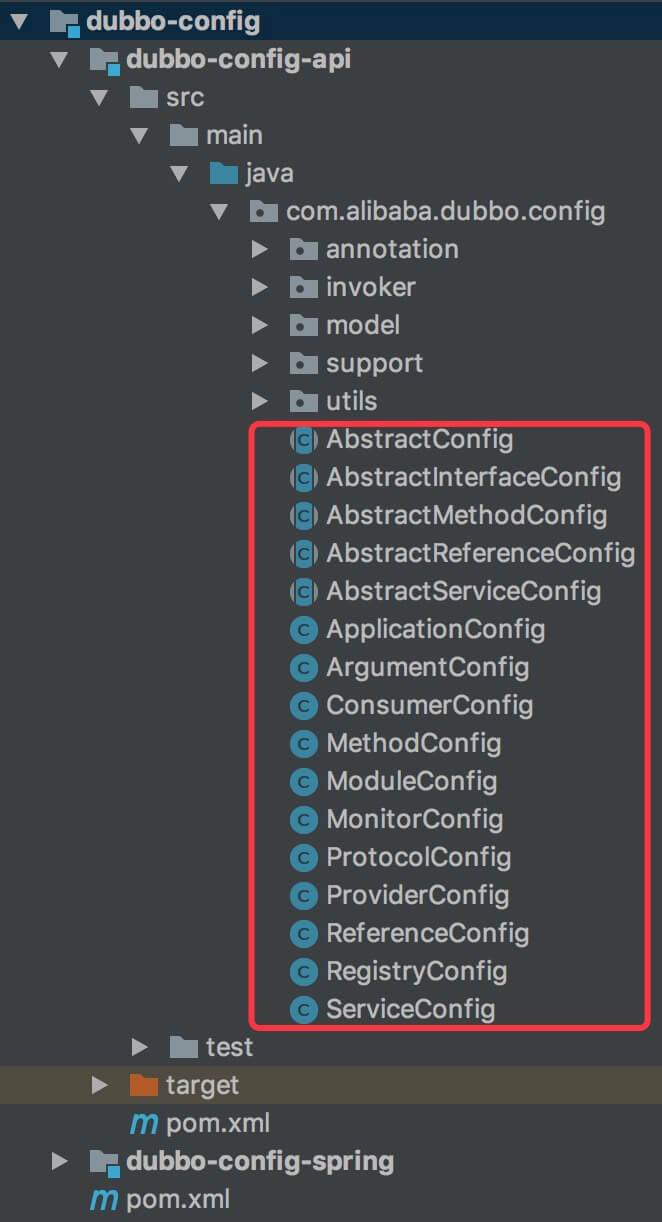
一脸懵逼,好多啊。下面我们来整理下配置之间的关系,如下图所示:
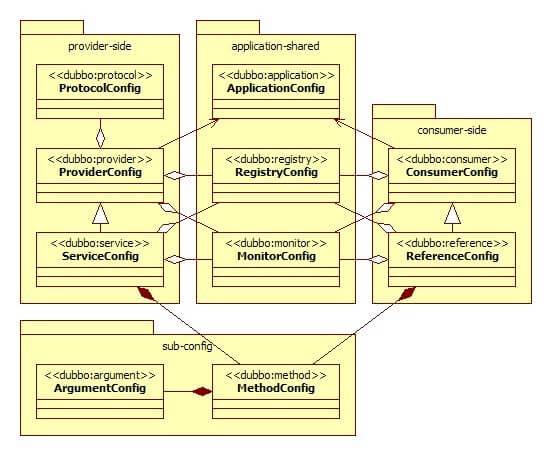
从这张图中,可以看出分成四个部分:
- application-shared
- provider-side
- consumer-side
- sub-config
实际上,上图和目前版本的代码会存在一点点出入,我们在看看实际的类关系,如下图所示:
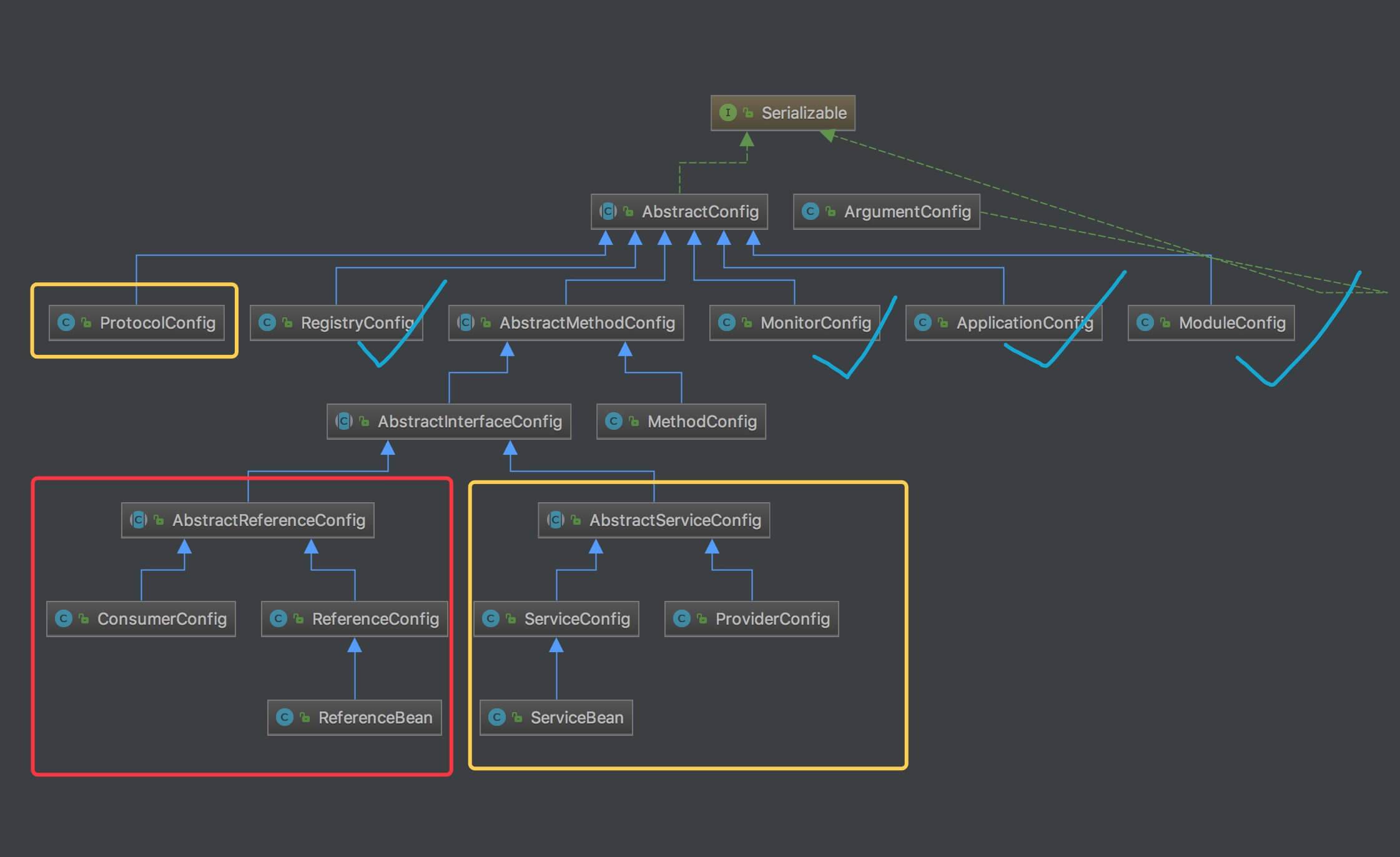
- 红勾部分,application-shared ,在本文进行分享。
- 黄框部分,provider-side ,在《API 配置(二)之服务提供者》分享。
- 红框部分,consumer-side ,在《API 配置(三)之服务消费者》分享。
- 其他部分,sub-config ,在《API 配置(二)之服务提供者》分享。
3. Config
我们先来看一段 《Dubbo 用户指南 —— API 配置》 ,提供的消费者的初始化代码:
1
2
3
4
5
6
7
8
9
10
11
12
13
14
15
16
17
18
19
20
// 当前应用配置
ApplicationConfig application = new ApplicationConfig();
application.setName("yyy");
// 连接注册中心配置
RegistryConfig registry = new RegistryConfig();
registry.setAddress("10.20.130.230:9090");
registry.setUsername("aaa");
registry.setPassword("bbb");
// 注意:ReferenceConfig为重对象,内部封装了与注册中心的连接,以及与服务提供方的连接
// 引用远程服务
ReferenceConfig<XxxService> reference = new ReferenceConfig<XxxService>();
// 此实例很重,封装了与注册中心的连接以及与提供者的连接,请自行缓存,否则可能造成内存和连接泄漏
reference.setApplication(application);
reference.setRegistry(registry);
// 多个注册中心可以用setRegistries()
reference.setInterface(XxxService.class);
reference.setVersion("1.0.0");
// 和本地bean一样使用xxxService
XxxService xxxService = reference.get();
// 注意:此代理对象内部封装了所有通讯细节,对象较重,请缓存复用
- 可以看到,创建了 ApplicationConfig 和 RegistryConfig 对象,设置到 ReferenceConfig 对象。
- 如果创建 ModuleConfig 或 MonitorConfig 对象,也是可以设置到 ReferenceConfig 对象中。
3.1 AbstractConfig
com.alibaba.dubbo.config.AbstractConfig ,抽象配置类,除了 ArgumentConfig ,我们可以看到所有的配置类都继承该类。
AbstractConfig 主要提供配置解析与校验相关的工具方法。下面我们开始看看它的代码。
id 属性,配置对象的编号,适用于除了 API 配置之外的三种配置方式,标记一个配置对象,可用于对象之间的引用。例如 XML 的 ,其中 provider 为 的 ID 属性。
那为什么说不适用 API 配置呢?直接 #setXXX(config) 对象即可。
配置项校验的工具方法,例如属性值长度限制、格式限制等等,比较简单。相关代码如下:
#appendParameters(parameters, config, prefix) 方法,将配置对象的属性,添加到参数集合。代码如下 :
在看具体代码之前,我们先来了解 「4. URL」 和 「5. @Parameter」 。
1
2
3
4
5
6
7
8
9
10
11
12
13
14
15
16
17
18
19
20
21
22
23
24
25
26
27
28
29
30
31
32
33
34
35
36
37
38
39
40
41
42
43
44
45
46
47
48
49
50
51
52
53
54
55
56
57
58
59
60
61
62
63
64
65
66
67
68
protected static void appendParameters(Map<String, String> parameters, Object config, String prefix) {
    if (config == null) {
        return;
    }
    Method[] methods = config.getClass().getMethods();
    for (Method method : methods) {
        try {
            String name = method.getName();
            if ((name.startsWith("get") || name.startsWith("is")) && !"getClass".equals(name)
                && Modifier.isPublic(method.getModifiers()) && method.getParameterTypes().length == 0
                && isPrimitive(method.getReturnType())) {
                // 方法为获取基本类型,public 的 getting 方法。
                Parameter parameter = method.getAnnotation(Parameter.class);
                if (method.getReturnType() == Object.class || parameter != null && parameter.excluded()) {
                    continue;
                }
                // 获得属性名
                int i = name.startsWith("get") ? 3 : 2;
                String prop = StringUtils.camelToSplitName(name.substring(i, i + 1).toLowerCase() + name.substring(i + 1), ".");
                String key;
                if (parameter != null && parameter.key() != null && parameter.key().length() > 0) {
                    key = parameter.key();
                } else {
                    key = prop;
                }
                // 获得属性值
                Object value = method.invoke(config, new Object[0]);
                String str = String.valueOf(value).trim();
                if (value != null && str.length() > 0) {
                    // 转义
                    if (parameter != null && parameter.escaped()) {
                        str = URL.encode(str);
                    }
                    // 拼接,详细说明参见 `Parameter#append()` 方法的说明。
                    if (parameter != null && parameter.append()) {
                        String pre = parameters.get(Constants.DEFAULT_KEY + "." + key);
                        // default. 里获取,适用于 ServiceConfig =》ProviderConfig 、ReferenceConfig =》ConsumerConfig 。
                        if (pre != null && pre.length() > 0) {
                            str = pre + "," + str;
                        }
                        pre = parameters.get(key);
                        // 通过 `parameters` 属性配置,例如 `AbstractMethodConfig.parameters` 。
                        if (pre != null && pre.length() > 0) {
                            str = pre + "," + str;
                        }
                    }
                    if (prefix != null && prefix.length() > 0) {
                        key = prefix + "." + key;
                    }
                    parameters.put(key, str);
                    System.out.println("kv:" + key + "\t" + str);
                }
            } else if ("getParameters".equals(name) && Modifier.isPublic(method.getModifiers())
                       && method.getParameterTypes().length == 0 && method.getReturnType() == Map.class) {
                // `#getParameters()` 方法
                Map<String, String> map = (Map<String, String>) method.invoke(config, new Object[0]);
                if (map != null && map.size() > 0) {
                    String pre = (prefix != null && prefix.length() > 0 ? prefix + "." : "");
                    for (Map.Entry<String, String> entry : map.entrySet()) {
                        parameters.put(pre + entry.getKey().replace('-', '.'), entry.getValue());
                    }
                }
            }
        } catch (Exception e) {
            throw new IllegalStateException(e.getMessage(), e);
        }
    }
}
parameters,参数集合。实际上,该集合会用于URL.parameters。config,配置对象。prefix,属性前缀。用于配置项添加到parameters中时的前缀。- 第 5 行:获得所有方法的数组,为下面通过反射获得配置项的值做准备。
- 第 6 行:循环每个方法。
- 第 9 至 13 行:方法为获得基本类型 +
public的 getting 方法。- 第 14 至 17 行:返回值类型为 Object 或排除(
@Parameter.exclue=true)的配置项,跳过。 - 第 19 至 26 行:获得配置项名。
- 第 28 至 48 行:获得配置项值。中间有一些逻辑处理,胖友看下代码的注释。
- 第 49 行:添加配置项到
parameters。 - 第 51 至 53 行:当
@Parameter.required = true时,校验配置项非空。
- 第 14 至 17 行:返回值类型为 Object 或排除(
- 第 54 至 57 行:当方法为
#getParameters()时,例如。- 第 58 行:通过反射,获得
#getParameters()的返回值为map。 - 第 59 至 64 行:将
map添加到parameters,kv 格式为prefix:entry.keyentry.value。 - 因此,通过
#getParameters()对应的属性,可以动态设置配置项,拓展出非 Dubbo 内置好的逻辑。
- 第 58 行:通过反射,获得
#appendAttributes(parameters, config, prefix) 方法,将 @Parameter(attribute = true) 配置对象的属性,添加到参数集合。代码如下:
1
2
3
4
5
6
7
8
9
10
11
12
13
14
15
16
17
18
19
20
21
22
23
24
25
26
27
28
29
30
31
32
33
34
35
36
protected static void appendAttributes(Map<Object, Object> parameters, Object config, String prefix) {
    if (config == null) {
        return;
    }
    Method[] methods = config.getClass().getMethods();
    for (Method method : methods) {
        try {
            String name = method.getName();
            if ((name.startsWith("get") || name.startsWith("is")) && !"getClass".equals(name)
                && Modifier.isPublic(method.getModifiers()) && method.getParameterTypes().length == 0
                && isPrimitive(method.getReturnType())) {
                // 方法为获取基本类型,public 的 getting 方法。
                Parameter parameter = method.getAnnotation(Parameter.class);
                if (parameter == null || !parameter.attribute()) continue;
                // 获得属性名
                String key;
                if (parameter != null && parameter.key() != null && parameter.key().length() > 0) {
                    key = parameter.key();
                } else {
                    int i = name.startsWith("get") ? 3 : 2;
                    key = name.substring(i, i + 1).toLowerCase() + name.substring(i + 1);
                }
                // 获得属性值,存在则添加到 `parameters` 集合
                Object value = method.invoke(config, new Object[0]);
                if (value != null) {
                    if (prefix != null && prefix.length() > 0) {
                        key = prefix + "." + key;
                    }
                    parameters.put(key, value);
                }
            }
        } catch (Exception e) {
            throw new IllegalStateException(e.getMessage(), e);
        }
    }
}
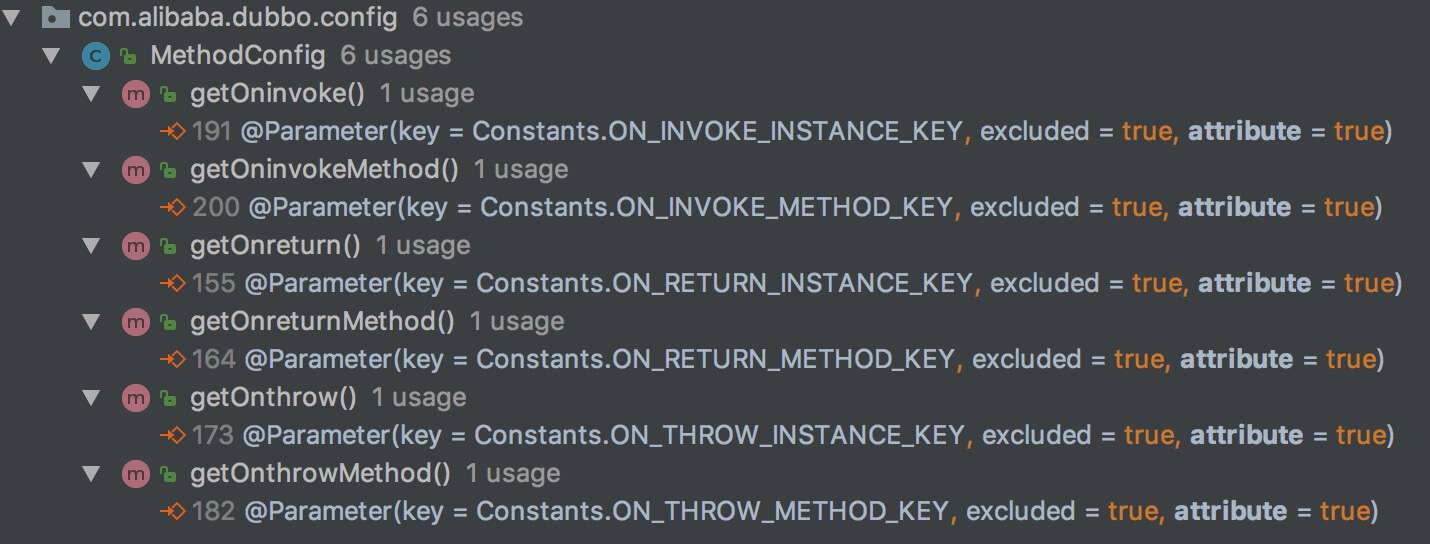
- 不同于 #appendParameters(parameters, config, prefix) 方法,主要用于《Dubbo 用户指南 —— 事件通知》,注解
@Parameter(attribute = true)的属性如下图:
- 第 9 至 13 行:方法为获得基本类型 +
public的 getting 方法。 - 第 14 至 16 行:需要
@Parameter.attribute = true的配置项。 - 第 17 至 24 行:获得配置项名。
- 第 26 至 30 行:获得配置项值。
- 第 31 行:添加配置项到
parameters。
#appendProperties(config) 方法,读取环境变量和 properties 配置到配置对象。在 《精进 Dubbo 源码解析 —— 属性配置》 详细解析。
#appendAnnotation(annotationClass, annotation) 方法,读取注解配置到配置对象。在 《精进 Dubbo 源码解析 —— 注解配置》 详细解析。
3.2 ApplicationConfig
com.alibaba.dubbo.config.ApplicationConfig ,应用配置。
- 具体属性的解释,参见 《Dubbo 用户指南 —— dubbo:application》 文档。
3.3 RegistryConfig
com.alibaba.dubbo.config.RegistryConfig ,注册中心配置。
- 具体属性的解释,参见 《Dubbo 用户指南 —— dubbo:registry》 文档。
3.4 ModuleConfig
com.alibaba.dubbo.config.ModuleConfig ,模块信息配置。
- 具体属性的解释,参见 《Dubbo 用户指南 —— dubbo:module》 文档。
3.5 MonitorConfig
com.alibaba.dubbo.config.MonitorConfig ,监控中心配置。
- 具体属性的解释,参见 《Dubbo 用户指南 —— dubbo:monitor》 文档。
3.6 ArgumentConfig
com.alibaba.dubbo.config.ArgumentConfig ,方法参数配置。
- 具体属性的解释,参见 《Dubbo 用户指南 —— dubbo:argument》 文档。
- 该配置类设置到 MethodConfig 对象中,在 《API 配置(二)之服务提供者》 我们会看到。
- 在 《Dubbo 用户指南 —— 参数回调》 特性中使用。
4. URL
com.alibaba.dubbo.common.URL ,Dubbo URL 。代码如下:
1
2
3
4
5
6
7
8
9
10
11
12
13
14
15
16
17
18
19
20
21
22
23
24
25
26
27
28
29
30
31
32
33
public final class URL implements Serializable {
    /**
     * 协议名
     */
    private final String protocol;
    /**
     * 用户名
     */
    private final String username;
    /**
     * 密码
     */
    private final String password;
    /**
     * by default, host to registry
     * 地址
     */
    private final String host;
    /**
     * by default, port to registry
     * 端口
     */
    private final int port;
    /**
     * 路径(服务名)
     */
    private final String path;
    /**
     * 参数集合
     */
    private final Map<String, String> parameters;
    // ... 省略其他代码
}
- 上文我们提到所有配置最终都将转换为 Dubbo URL 表示,并由服务提供方生成,经注册中心传递给消费方,各属性对应 URL 的参数,参见配置项一览表中的 “对应URL参数” 列。那么一个 Service 注册到注册中心的格式如下:
1
dubbo://192.168.3.17:20880/com.alibaba.dubbo.demo.DemoService?anyhost=true&application=demo-provider&default.delay=-1&default.retries=0&default.service.filter=demoFilter&delay=-1&dubbo=2.0.0&generic=false&interface=com.alibaba.dubbo.demo.DemoService&methods=sayHello&pid=19031&side=provider×tamp=1519651641799
- 格式为
protocol://username:password@host:port/path?key=value&key=value,通过 URL#buildString(…) 方法生成。 parameters属性,参数集合。从上面的 Service URL 例子我们可以看到,里面的key=value,实际上就是 Service 对应的配置项。该属性,通过 AbstractConfig#appendParameters(parameters, config, prefix) 方法生成。- 在后续的文章中,我们会发现 URL 作为一个通用模型,贯穿整个 RPC 流程。
5. @Parameter
com.alibaba.dubbo.config.support.@Parameter ,Parameter 参数注解,用于 Dubbo URL 的 parameters 拼接。
在配置对象的 getting 方法上,我们可以看到该注解的使用,例如下图:
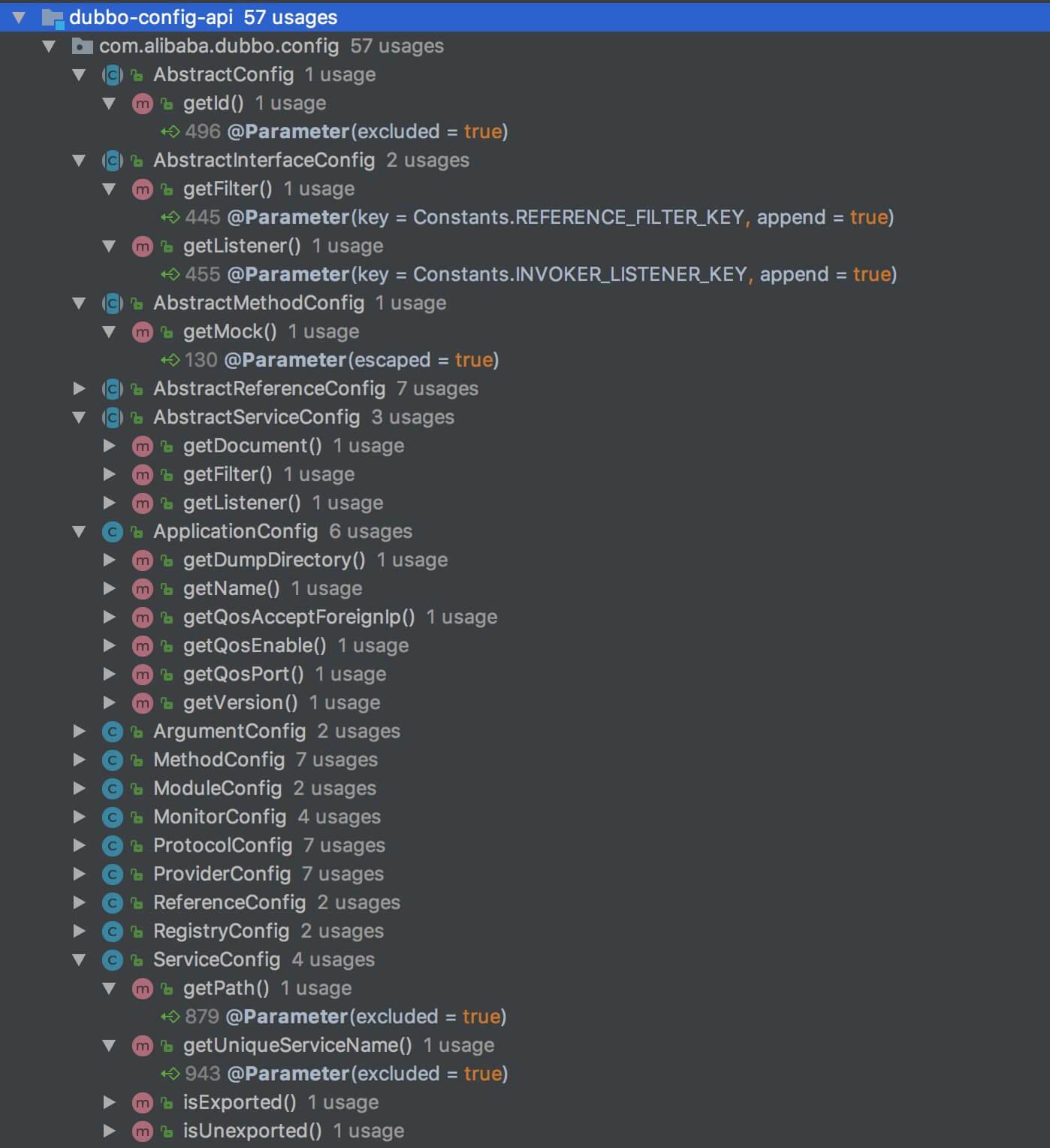
@Parameter 代码如下:
1
2
3
4
5
6
7
8
9
10
11
12
13
14
15
16
17
18
19
20
21
22
23
24
25
26
27
28
29
30
31
32
33
34
35
36
37
38
39
40
41
42
43
44
45
46
47
48
49
50
@Documented
@Retention(RetentionPolicy.RUNTIME)
@Target({ElementType.METHOD})
public @interface Parameter {
    /**
     * 键(别名)
     */
    String key() default "";
    /**
     * 是否必填
     */
    boolean required() default false;
    /**
     * 是否忽略
     */
    boolean excluded() default false;
    /**
     * 是否转义
     */
    boolean escaped() default false;
    /**
     * 是否为属性
     *
     * 目前用于《事件通知》http://dubbo.apache.org/zh-cn/docs/user/demos/events-notify.html
     */
    boolean attribute() default false;
    /**
     * 是否拼接默认属性,参见 {@link com.alibaba.dubbo.config.AbstractConfig#appendParameters(Map, Object, String)} 方法。
     *
     * 我们来看看 `#append() = true` 的属性,有如下四个:
     * + {@link AbstractInterfaceConfig#getFilter()}
     * + {@link AbstractInterfaceConfig#getListener()}
     * + {@link AbstractReferenceConfig#getFilter()}
     * + {@link AbstractReferenceConfig#getListener()}
     * + {@link AbstractServiceConfig#getFilter()}
     * + {@link AbstractServiceConfig#getListener()}
     *
     * 那么,以 AbstractServiceConfig 举例子。
     *
     * 我们知道 ProviderConfig 和 ServiceConfig 继承 AbstractServiceConfig 类,那么 `filter` , `listener` 对应的相同的键。
     * 下面我们以 `filter` 举例子。
     *
     * 在 ServiceConfig 中,默认会<b>继承</b> ProviderConfig 配置的 `filter` 和 `listener` 。
     * 所以这个属性,就是用于,像 ServiceConfig 的这种情况,从 ProviderConfig 读取父属性。
     *
     * 举个例子,如果 `ProviderConfig.filter=aaaFilter` ,`ServiceConfig.filter=bbbFilter` ,
     * 最终暴露到 Dubbo URL 时,参数为 `service.filter=aaaFilter,bbbFilter` 。
     */
    boolean append() default false;
}
- 胖友可以简单看下代码中的注释,结合具体使用的方法,在细细理解。