Semaphore 原理
https://www.iocoder.cn/JUC/sike/Semaphore/
1. 简介
信号量 Semaphore 是一个控制访问多个共享资源的计数器,和 CountDownLatch 一样,其本质上是一个”共享锁“。
Semaphore,在 API 是这么介绍的:
一个计数信号量。从概念上讲,信号量维护了一个许可集。
如有必要,在许可可用前会阻塞每一个 acquire,然后再获取该许可。
每个 release 添加一个许可,从而可能释放一个正在阻塞的获取者。
但是,不使用实际的许可对象,Semaphore 只对可用许可的号码进行计数,并采取相应的行动。
Semaphore 通常用于限制可以访问某些资源(物理或逻辑的)的线程数目。
下面我们就一个停车场的简单例子来阐述 Semaphore :
- 为了简单起见我们假设停车场仅有 5 个停车位。一开始停车场没有车辆所有车位全部空着,然后先后到来三辆车,停车场车位够,安排进去停车,然后又来三辆,这个时候由于只有两个停车位,所有只能停两辆,其余一辆必须在外面候着,直到停车场有空车位。当然,以后每来一辆都需要在外面候着。当停车场有车开出去,里面有空位了,则安排一辆车进去(至于是哪辆,要看选择的机制是公平还是非公平)。
- 从程序角度看,停车场就相当于信号量 Semaphore ,其中许可数为 5 ,车辆就相对线程。当来一辆车时,许可数就会减 1 。当停车场没有车位了(许可数 == 0 ),其他来的车辆需要在外面等候着。如果有一辆车开出停车场,许可数 + 1,然后放进来一辆车。
- 信号量 Semaphore 是一个非负整数( >=1 )。当一个线程想要访问某个共享资源时,它必须要先获取 Semaphore。当 Semaphore > 0 时,获取该资源并使 Semaphore – 1 。如果S emaphore 值 = 0,则表示全部的共享资源已经被其他线程全部占用,线程必须要等待其他线程释放资源。当线程释放资源时,Semaphore 则 +1 。
2. 实现分析
java.util.concurrent.Semaphore 结构如下图:
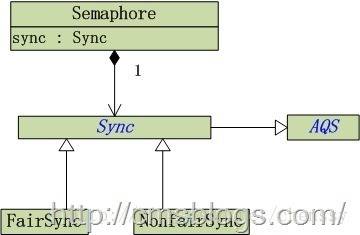
从上图可以看出,Semaphore 内部包含公平锁(FairSync)和非公平锁(NonfairSync),继承内部类 Sync ,其中 Sync 继承 AQS(再一次阐述 AQS 的重要性)。
Semaphore 提供了两个构造函数:
- Semaphore(int permits) :创建具有给定的许可数和非公平的公平设置的 Semaphore 。
- Semaphore(int permits, boolean fair) :创建具有给定的许可数和给定的公平设置的 Semaphore 。
实现如下:
1
2
3
4
5
6
public Semaphore(int permits) {
    sync = new NonfairSync(permits);
}
public Semaphore(int permits, boolean fair) {
    sync = fair ? new FairSync(permits) : new NonfairSync(permits);
}
- Semaphore 默认选择非公平锁。
- 当信号量 Semaphore = 1 时,它可以当作互斥锁使用。其中 0、1 就相当于它的状态:1)当 =1 时表示,其他线程可以获取;2)当 =0 时,排他,即其他线程必须要等待。
- 🙂 Semaphore 的代码实现结构,和 ReentrantLock 类似。
2.1 信号量获取
Semaphore 提供了 #acquire() 方法,来获取一个许可。
1
2
3
public void acquire() throws InterruptedException {
    sync.acquireSharedInterruptibly(1);
}
- 内部调用 AQS 的 #acquireSharedInterruptibly(int arg) 方法,该方法以共享模式获取同步状态。代码如下:
1
2
3
4
public final void acquireSharedInterruptibly(int arg) throws InterruptedException {
    if (Thread.interrupted()) throw new InterruptedException();
    if (tryAcquireShared(arg) < 0) doAcquireSharedInterruptibly(arg);
}
在 #acquireSharedInterruptibly(int arg) 方法中,会调用 #tryAcquireShared(int arg) 方法。而 #tryAcquireShared(int arg) 方法,由子类来实现。对于 Semaphore 而言,如果我们选择非公平模式,则调用 NonfairSync 的#tryAcquireShared(int arg) 方法,否则调用 FairSync 的 #tryAcquireShared(int arg) 方法。若 #tryAcquireShared(int arg) 方法返回 < 0 时,则会阻塞等待,从而实现 Semaphore 信号量不足时的阻塞,代码如下:
1
2
3
4
5
6
7
8
9
10
11
12
13
14
15
16
17
18
19
20
21
22
23
24
25
26
27
// AQS.java
private void doAcquireSharedInterruptibly(int arg) throws InterruptedException {
    final Node node = addWaiter(Node.SHARED);
    boolean failed = true;
    try {
        for (;;) {
            final Node p = node.predecessor();
            if (p == head) {
                int r = tryAcquireShared(arg);
                if (r >= 0) {
                    setHeadAndPropagate(node, r);
                    p.next = null;
                    // help GC
                    failed = false;
                    return;
                }
            }
            if (shouldParkAfterFailedAcquire(p, node) && parkAndCheckInterrupt()) {
                throw new InterruptedException();
            }
        }
    } finally {
        if (failed) {
            cancelAcquire(node);
        }
    }
}
- 老艿艿:另外,这也是为什么 Semaphore 在使用 AQS 时,state 代表的是,剩余可获取的许可数,而不是已经使用的许可数。我们假设 state 代表的是已经使用的许可数,那么 #tryAcquireShared(int arg) 返回的结果 = 原始许可数 - state ,这个操作在并发情况下,会存在线程不安全的问题。所以,state 代表的是,剩余可获取的许可数,而不是已经使用的许可数。
公平情况的 FairSync 的方法实现,代码如下:
1
2
3
4
5
6
7
8
9
10
11
12
13
// FairSync.java
@Override protected int tryAcquireShared(int acquires) {
    for (;;) {
        //判断该线程是否位于CLH队列的列头,从而实现公平锁
        if (hasQueuedPredecessors()) return -1;
        //获取当前的信号量许可
        int available = getState();
        //设置"获得acquires个信号量许可之后,剩余的信号量许可数"
        int remaining = available - acquires;
        //CAS设置信号量
        if (remaining < 0 || compareAndSetState(available, remaining)) return remaining;
    }
}
- 通过 #hasQueuedPredecessors() 方法,判断该线程是否位于 CLH 队列的列头,从而实现公平锁。
非公平情况的 NonfairSync 的方法实现,代码如下:
1
2
3
4
5
6
7
8
9
10
11
12
// NonfairSync.java
protected int tryAcquireShared(int acquires) {
    return nonfairTryAcquireShared(acquires);
}
// Sync.java
final int nonfairTryAcquireShared(int acquires) {
    for (;;) {
        int available = getState();
        int remaining = available - acquires;
        if (remaining < 0 || compareAndSetState(available, remaining)) return remaining;
    }
}
- 对于非公平而言,因为它不需要判断当前线程是否位于 CLH 同步队列列头,所以相对而言会简单些。
2.2 信号量释放
获取了许可,当用完之后就需要释放,Semaphore 提供 #release() 方法,来释放许可。代码如下:
1
2
3
public void release() {
    sync.releaseShared(1);
}
- 内部调用 AQS 的 #releaseShared(int arg) 方法,释放同步状态。
1
2
3
4
5
6
7
8
// AQS.java
public final boolean releaseShared(int arg) {
    if (tryReleaseShared(arg)) {
        doReleaseShared();
        return true;
    }
    return false;
}
releaseShared(int arg)方法,会调用 Semaphore 内部类 Sync 的#tryReleaseShared(int arg)方法,释放同步状态。
1
2
3
4
5
6
7
8
9
10
11
12
13
// Sync.java
protected final boolean tryReleaseShared(int releases) {
    for (;;) {
        int current = getState();
        //信号量的许可数 = 当前信号许可数 + 待释放的信号许可数
        int next = current + releases;
        if (next < current) {
            throw new Error("Maximum permit count exceeded");
        }
        //设置可获取的信号许可数为next
        if (compareAndSetState(current, next)) return true;
    }
}
- 如该方法返回 true 时,代表释放同步状态成功,从而在
#releaseShared(int args)方法中,调用#doReleaseShared()方法,可唤醒阻塞等待 Semaphore 的许可的线程。 - 对于信号量的获取释放详细过程,请参考如下博客:
2.3 其他方法
本文有部分方法并未解析,因为比较简单,胖友可以自己研究。
Semaphore :
- #acquireUninterruptibly()
- #tryAcquire()
- #tryAcquire(long timeout, TimeUnit unit)
- #acquire(int permits)
- #acquireUninterruptibly(int permits)
- #tryAcquire(int permits)
- #tryAcquire(int permits, long timeout, TimeUnit unit)
- #availablePermits()
- #drainPermits()
- #reducePermits(int reduction)
- #isFair()
- #hasQueuedThreads()
- #getQueueLength()
- #getQueuedThreads()
Sync :
- #reducePermits(int reductions)
- #drainPermits()
3. 应用示例
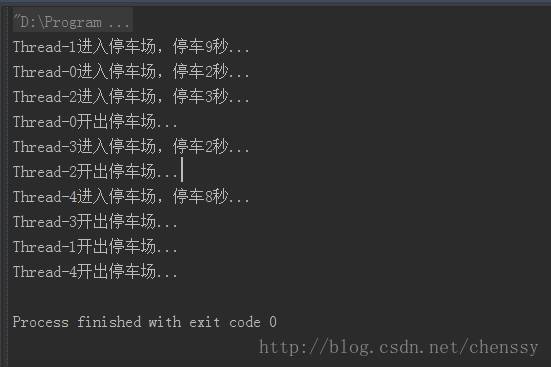
我们已停车为示例:
1
2
3
4
5
6
7
8
9
10
11
12
13
14
15
16
17
18
19
20
21
22
23
24
25
26
27
28
29
30
31
32
33
34
35
36
37
38
39
40
41
42
43
public class SemaphoreTest {
    static class Parking {
        private final Semaphore semaphore;

        Parking(int count) {
            semaphore = new Semaphore(count);
        }

        public void park() {
            try {
                semaphore.acquire();
                long time = (long) (Math.random() * 10);
                System.out.println(Thread.currentThread().getName() + "进入停车场,停车" + time + "秒…");
                Thread.sleep(time * 1000);
                System.out.println(Thread.currentThread().getName() + "开出停车场…");
            } catch (InterruptedException e) {
                Thread.currentThread().interrupt();
            } finally {
                semaphore.release();
            }
        }
    }

    static class Car extends Thread {
        private final Parking parking;

        Car(Parking parking) {
            this.parking = parking;
        }

        @Override
        public void run() {
            parking.park();
        }
    }

    public static void main(String[] args) {
        Parking parking = new Parking(3);
        for (int i = 0; i < 5; i++) {
            new Car(parking).start();
        }
    }
}
运行结果如下: