IOC-获取Document对象
本文主要基于 Spring 5.0.6.RELEASE
摘要: 原创出处 http://cmsblogs.com/?p=2695 「小明哥」,谢谢!
在 XmlBeanDefinitionReader#doLoadDocument(InputSource inputSource, Resource resource) 方法,中做了两件事情:
- 调用 验证模式 #getValidationModeForResource(Resource resource) 方法,获取指定资源(xml)的 。
- 上篇博客,我们已经详细解析。
- 调用 DocumentLoader#loadDocument(InputSource inputSource, EntityResolver entityResolver, ErrorHandler errorHandler, int validationMode, boolean namespaceAware) 方法,获取 XML Document 实例。
- 本篇博客,我们来详细解析。
1. DocumentLoader
获取 Document 的策略,由接口 org.springframework.beans.factory.xml.DocumentLoader 定义。代码如下:
FROM 《Spring 源码深度解析》P16 页
定义从资源文件加载到转换为 Document 的功能。
1
java public interface DocumentLoader {      Document loadDocument(         InputSource inputSource, EntityResolver entityResolver,         ErrorHandler errorHandler, int validationMode, boolean namespaceAware)     throws Exception;  }
- inputSource 方法参数,加载 Document 的 Resource 资源。
- entityResolver 方法参数,解析文件的解析器。
- errorHandler 方法参数,处理加载 Document 对象的过程的错误。
- validationMode 方法参数,验证模式。
- namespaceAware 方法参数,命名空间支持。如果要提供对 XML 名称空间的支持,则需要值为 true 。
1.1 DefaultDocumentLoader
该方法由 DocumentLoader 的默认实现类 org.springframework.beans.factory.xml.DefaultDocumentLoader 实现。代码如下:
1
2
3
4
5
6
7
8
9
10
11
12
13
14
15
16
17
18
/** * Load the {
    @link Document
}
at the supplied {
    @link InputSource
}
using the standard JAXP-configured
* XML parser. */
@Override
public Document loadDocument(InputSource inputSource, EntityResolver entityResolver,                             ErrorHandler errorHandler, int validationMode, boolean namespaceAware) throws Exception {
    // <1> 创建 DocumentBuilderFactory    DocumentBuilderFactory factory = createDocumentBuilderFactory(validationMode, namespaceAware);
    if (logger.isTraceEnabled()) {
        logger.trace("Using JAXP provider [" + factory.getClass().getName() + "]");
    } // <2> 创建 DocumentBuilder    DocumentBuilder builder = createDocumentBuilder(factory, entityResolver, errorHandler);    // <3> 解析 XML InputSource 返回
    Document 对象    return builder.parse(inputSource);
}
- 首先,调用 # createDocumentBuilderFactory(…) 方法,创建 javax.xml.parsers.DocumentBuilderFactory 对象。代码如下:
1
2
3
4
5
6
7
8
9
10
11
12
13
14
15
16
17
18
19
20
21
22
23
24
25
26
27
28
29
30
31
/** * JAXP attribute used to configure the schema language for validation. */
private static final String SCHEMA_LANGUAGE_ATTRIBUTE = "http://java.sun.com/xml/jaxp/properties/schemaLanguage";
/** * JAXP attribute value indicating the XSD schema language. */
private static final String XSD_SCHEMA_LANGUAGE = "http://www.w3.org/2001/XMLSchema";
protected DocumentBuilderFactory createDocumentBuilderFactory(int validationMode,
boolean namespaceAware)throws
ParserConfigurationException {
    // 创建 DocumentBuilderFactory    DocumentBuilderFactory factory =
    DocumentBuilderFactory.newInstance();
    factory.setNamespaceAware(namespaceAware);
    // 设置命名空间支持    if (validationMode != XmlValidationModeDetector.VALIDATION_NONE) {        factory.setValidating(true);
    // 开启校验        // XSD 模式下,设置 factory 的属性
    if (validationMode == XmlValidationModeDetector.VALIDATION_XSD) {
        // Enforce namespace aware
        for XSD...            factory.setNamespaceAware(true); // XSD 模式下,强制设置命名空间支持            // 设置 SCHEMA_LANGUAGE_ATTRIBUTE
        try {
            factory.setAttribute(SCHEMA_LANGUAGE_ATTRIBUTE, XSD_SCHEMA_LANGUAGE);
        }
        catch (IllegalArgumentException ex) {
            ParserConfigurationException pcex =
            new
            ParserConfigurationException(                    "Unable to validate using XSD: Your JAXP provider [" + factory +                    "] does not support XML Schema. Are you running on Java 1.4 with Apache Crimson? " +                    "Upgrade to Apache Xerces (or Java 1.5) for full XSD support.");
            pcex.initCause(ex);
            throw pcex;
        }
    }
}
return factory;
}
- 然后,调用 #createDocumentBuilder(DocumentBuilderFactory factory, EntityResolver entityResolver,ErrorHandler errorHandler) 方法,创建 javax.xml.parsers.DocumentBuilder 对象。代码如下:
1
2
3
4
5
6
7
8
9
10
11
12
13
protected DocumentBuilder createDocumentBuilder(DocumentBuilderFactory factory,                                                @Nullable
EntityResolver entityResolver, @Nullable
ErrorHandler errorHandler)throws ParserConfigurationException {
    // 创建 DocumentBuilder 对象
    DocumentBuilder docBuilder = factory.newDocumentBuilder(); // <x> 设置 EntityResolver 属性
    if (entityResolver != null) {
        docBuilder.setEntityResolver(entityResolver);
    } // 设置
    ErrorHandler 属性    if (errorHandler != null) {
        docBuilder.setErrorHandler(errorHandler);
    }
    return docBuilder;
}
1
- <font style="color:rgb(51, 51, 51);">在 </font><font style="color:rgb(51, 51, 51);"><x></font><font style="color:rgb(51, 51, 51);"> 处,设置 DocumentBuilder 的 </font>**<font style="color:rgb(51, 51, 51);">EntityResolver</font>**<font style="color:rgb(51, 51, 51);"> 属性。关于它,在 </font>[「2. EntityResolver」](http://svip.iocoder.cn/Spring/IoC-load-Document/#)<font style="color:rgb(51, 51, 51);"> 会详细解析。</font>
- 最后,调用 DocumentBuilder#parse(InputSource) 方法,解析 InputSource ,返回 Document 对象。
2. EntityResolver
通过 DocumentLoader#loadDocument(…) 方法来获取 Document 对象时,有一个方法参数 entityResolver 。该参数是通过 XmlBeanDefinitionReader#getEntityResolver() 方法来获取的。代码如下:
#getEntityResolver() 方法,返回指定的解析器,如果没有指定,则构造一个未指定的默认解析器。
1
2
3
4
5
6
7
8
9
10
11
12
13
14
15
16
17
18
19
// XmlBeanDefinitionReader.java
/** * EntityResolver 解析器 */
@Nullable
private EntityResolver entityResolver;
protected EntityResolver getEntityResolver() {
    if (this.entityResolver == null) {
        // Determine
        default EntityResolver to use.
        ResourceLoader resourceLoader = getResourceLoader();
        if (resourceLoader != null) {
            this.entityResolver = new
            ResourceEntityResolver(resourceLoader);
        }
        else {
            this.entityResolver = new DelegatingEntityResolver(getBeanClassLoader());
        }
    }
    return this.entityResolver;
}
- 如果 ResourceLoader 不为 null ,则根据指定的 ResourceLoader 创建一个 ResourceEntityResolver 对象。
- 如果 ResourceLoader 为 null ,则创建 一个 DelegatingEntityResolver 对象。该 Resolver 委托给默认的 BeansDtdResolver 和 PluggableSchemaResolver 。
2.1 子类
上面的方法,一共涉及四个 EntityResolver 的子类:
- org.springframework.beans.factory.xm.BeansDtdResolver :实现 EntityResolver 接口,Spring Bean dtd 解码器,用来从 classpath 或者 jar 文件中加载 dtd 。部分代码如下:
1
2
private static final String DTD_EXTENSION = ".dtd";
private static final String DTD_NAME = "spring-beans";
- org.springframework.beans.factory.xml.PluggableSchemaResolver ,实现 EntityResolver 接口,读取 classpath 下的所有 “META-INF/spring.schemas” 成一个 namespaceURI 与 Schema 文件地址的 map 。代码如下:
1
2
3
4
5
6
7
8
9
10
11
12
/** * The location of the file that defines schema mappings. * Can be present in multiple JAR files. * * 默认 {
    @link #schemaMappingsLocation
}
地址 */
public static final String DEFAULT_SCHEMA_MAPPINGS_LOCATION = "META-INF/spring.schemas";
@Nullable
private final ClassLoader classLoader;
/** * Schema 文件地址 */
private final String schemaMappingsLocation;
/** Stores the mapping of schema URL -> local schema path. */
@Nullable
private volatile Map<String, String> schemaMappings; // namespaceURI 与 Schema 文件地址的映射集合
- org.springframework.beans.factory.xml.DelegatingEntityResolver :实现 EntityResolver 接口,分别代理 dtd 的 BeansDtdResolver 和 xml schemas 的 PluggableSchemaResolver 。代码如下:
1
2
3
4
5
6
7
8
9
10
11
12
13
14
15
16
17
18
19
20
21
22
/** Suffix for DTD files. */
public static final String DTD_SUFFIX = ".dtd";
/** Suffix for schema definition files. */
public static final String XSD_SUFFIX = ".xsd";
private final EntityResolver dtdResolver;
private final EntityResolver schemaResolver; // 默认public DelegatingEntityResolver(@Nullable
ClassLoader classLoader) {
    this.dtdResolver = new BeansDtdResolver();
    this.schemaResolver = new PluggableSchemaResolver(classLoader);
} // 自定义public DelegatingEntityResolver(EntityResolver dtdResolver, EntityResolver schemaResolver)
{
    Assert.notNull(dtdResolver, "'dtdResolver' is required");
    Assert.notNull(schemaResolver, "'schemaResolver' is required");
    this.dtdResolver = dtdResolver;
}
Assert.notNull(dtdResolver, "'dtdResolver' is required");
Assert.notNull(schemaResolver, "'schemaResolver' is required");
this.dtdResolver = dtdResolver;
this.schemaResolver = schemaResolver;
}
org.springframework.beans.factory.xml.ResourceEntityResolver :继承自 DelegatingEntityResolver 类,通过 ResourceLoader 来解析实体的引用。代码如下:
1
2
3
4
5
6
7
private final ResourceLoader resourceLoader;
public ResourceEntityResolver(ResourceLoader resourceLoader) {
    super(resourceLoader.getClassLoader());
    this.resourceLoader = resourceLoader;
}
2.2 作用
EntityResolver 的作用就是,通过实现它,应用可以自定义如何寻找【验证文件】的逻辑。
FROM 《Spring 源码深度解析》 在 loadDocument 方法中涉及一个参数 EntityResolver ,何为EntityResolver?官网这样解释:如果 SAX 应用程序需要实现自定义处理外部实体,则必须实现此接口并使用 setEntityResolver 方法向SAX 驱动器注册一个实例。也就是说,对于解析一个XML,SAX 首先读取该 XML 文档上的声明,根据声明去寻找相应的 DTD 定义,以便对文档进行一个验证。默认的寻找规则,即通过网络(实现上就是声明的DTD的URI地址)来下载相应的DTD声明,并进行认证。下载的过程是一个漫长的过程,而且当网络中断或不可用时,这里会报错,就是因为相应的DTD声明没有被找到的原因。
EntityResolver 的作用是项目本身就可以提供一个如何寻找 DTD 声明的方法,即由程序来实现寻找 DTD 声明的过程,比如我们将 DTD 文件放到项目中某处,在实现时直接将此文档读取并返回给 SAX 即可。这样就避免了通过网络来寻找相应的声明。
org.xml.sax.EntityResolver 接口,代码如下:
1
2
3
public interface EntityResolver {
    public abstract InputSource resolveEntity (String publicId, String systemId)        throws SAXException, IOException;
}
接口方法接收两个参数 publicId 和 systemId ,并返回 InputSource 对象。两个参数声明如下:
- publicId :被引用的外部实体的公共标识符,如果没有提供,则返回 null 。
- systemId :被引用的外部实体的系统标识符。
这两个参数的实际内容和具体的验证模式的关系如下:
- XSD 验证模式
- publicId:null
- systemId:http://www.springframework.org/schema/beans/spring-beans.xsd -
 XSD 验证模式
- DTD 验证模式
- publicId:-//SPRING//DTD BEAN 2.0//EN
- systemId:http://www.springframework.org/dtd/spring-beans.dtd -
 DTD 验证模式
2.3 DelegatingEntityResolver
我们知道在 Spring 中使用 DelegatingEntityResolver 为 EntityResolver 的实现类。#resolveEntity(String publicId, String systemId) 方法,实现如下:
1
2
3
4
5
6
7
8
9
10
11
12
13
14
15
@Override@Nullable
public InputSource resolveEntity(String publicId, @Nullable
String systemId) throws SAXException, IOException {
    if (systemId != null) {
        // DTD 模式        if (systemId.endsWith(DTD_SUFFIX)) {            return
        this.dtdResolver.resolveEntity(publicId, systemId); // XSD 模式        }
        else
        if (systemId.endsWith(XSD_SUFFIX)) {
            return this.schemaResolver.resolveEntity(publicId, systemId);
        }
    }
    return null;
}
- 如果是 DTD 验证模式,则使用 BeansDtdResolver 来进行解析
- 如果是 XSD 验证模式,则使用 PluggableSchemaResolver 来进行解析。
2.4 BeansDtdResolver
BeansDtdResolver 的解析过程,代码如下:
1
2
3
4
5
6
7
8
9
10
11
12
13
14
15
16
17
18
19
20
21
22
23
24
25
26
27
28
29
30
31
32
33
34
35
36
37
38
39
40
41
/** * DTD 文件的后缀 */
private static final String DTD_EXTENSION = ".dtd";
/** * Spring Bean DTD 的文件名 */
private static final String DTD_NAME = "spring-beans";
@Override@Nullable
public InputSource resolveEntity(String publicId, @Nullable
String systemId) throws IOException {
    if (logger.isTraceEnabled()) {
        logger.trace("Trying to resolve XML entity with public ID [" + publicId +                "] and system ID [" + systemId + "]");
    } // 必须以 .dtd 结尾    if (systemId !=
    null && systemId.endsWith(DTD_EXTENSION)) {
        // 获取最后一个 / 的位置        int lastPathSeparator = systemId.lastIndexOf('/');        // 获取 spring-beans 的位置
        int dtdNameStart = systemId.indexOf(DTD_NAME, lastPathSeparator);
        if (dtdNameStart != -1) {
            // 找到
            String dtdFile = DTD_NAME + DTD_EXTENSION;
            if (logger.isTraceEnabled()) {
                logger.trace("Trying to locate [" + dtdFile + "] in Spring jar on classpath");
            }
            try {
                // 创建 ClassPathResource 对象
                Resource resource = new ClassPathResource(dtdFile, getClass()); // 创建 InputSource 对象,并设置
                publicId、systemId 属性                InputSource source = new InputSource(resource.getInputStream());
                source.setPublicId(publicId);
                source.setSystemId(systemId);
                if (logger.isTraceEnabled()) {
                    logger.trace("Found beans DTD [" + systemId + "] in classpath: " + dtdFile);
                }
                return source;
            }
            catch (IOException ex) {
                if (logger.isDebugEnabled()) {
                    logger.debug("Could not resolve beans DTD [" + systemId + "]: not found in classpath", ex);
                }
            }
        }
    } // 使用默认行为,从网络上下载    // Use the
    default behavior -> download from website or wherever.    return null;
}
从上面的代码中,我们可以看到,加载 DTD 类型的 BeansDtdResolver#resolveEntity(…) 过程,只是对 systemId 进行了简单的校验(从最后一个 / 开始,内容中是否包含 spring-beans),然后构造一个 InputSource 对象,并设置 publicId、systemId 属性,然后返回。
2.5 PluggableSchemaResolver
PluggableSchemaResolver 的解析过程,代码如下:
1
2
3
4
5
6
7
8
9
10
11
12
13
14
15
16
17
18
19
20
21
22
23
24
25
26
27
28
29
30
31
32
33
34
35
36
37
38
39
40
@Nullable
private final ClassLoader classLoader;
/** * Schema 文件地址 */
private final String schemaMappingsLocation;
/** Stores the mapping of schema URL -> local schema path. */
@Nullable
private volatile Map<String, String> schemaMappings; // namespaceURI 与 Schema 文件地址的映射集合@Override@Nullable
public InputSource resolveEntity(String publicId, @Nullable
String systemId) throws IOException {
    if (logger.isTraceEnabled()) {
        logger.trace("Trying to resolve XML entity with public id [" + publicId +                "] and system id [" + systemId + "]");
    }
    if (systemId != null) {
        // 获得
        Resource 所在位置
        String resourceLocation = getSchemaMappings().get(systemId);
        if (resourceLocation != null) {
            // 创建 ClassPathResource
            Resource resource = new ClassPathResource(resourceLocation, this.classLoader);
            try {
                // 创建 InputSource 对象,并设置
                publicId、systemId 属性                InputSource source = new InputSource(resource.getInputStream());
                source.setPublicId(publicId);
                source.setSystemId(systemId);
                if (logger.isTraceEnabled()) {
                    logger.trace("Found XML schema [" + systemId + "] in classpath: " + resourceLocation);
                }
                return source;
            }
            catch (FileNotFoundException ex) {
                if (logger.isDebugEnabled()) {
                    logger.debug("Could not find XML schema [" + systemId + "]: " + resource, ex);
                }
            }
        }
    }
    return null;
}
- 首先调用 #getSchemaMappings() 方法,获取一个映射表(systemId 与其在本地的对照关系)。代码如下:
1
2
3
4
5
6
7
8
9
10
11
12
13
14
15
16
17
18
19
20
21
22
23
24
25
26
27
private Map<String, String> getSchemaMappings() {
    Map<String, String> schemaMappings = this.schemaMappings; // 双重检查锁,实现 schemaMappings 单例
    if (schemaMappings == null) {
        synchronized (this) {
            schemaMappings = this.schemaMappings;
            if (schemaMappings == null) {
                if (logger.isTraceEnabled()) {
                    logger.trace("Loading schema mappings from [" + this.schemaMappingsLocation + "]");
                }
                try {
                    // 以 Properties 的方式,读取 schemaMappingsLocation                    Properties mappings = PropertiesLoaderUtils.loadAllProperties(this.schemaMappingsLocation,
                    this.classLoader);
                    if (logger.isTraceEnabled()) {
                        logger.trace("Loaded schema mappings: " + mappings);
                    } // 将 mappings 初始化到 schemaMappings 中                    schemaMappings =
                    new ConcurrentHashMap<>(mappings.size());
                    CollectionUtils.mergePropertiesIntoMap(mappings, schemaMappings);
                    this.schemaMappings = schemaMappings;
                }
                catch (IOException ex) {
                    throw new IllegalStateException(                        "Unable to load schema mappings from location [" + this.schemaMappingsLocation + "]", ex);
                }
            }
        }
    }
    return schemaMappings;
}
1
- <font style="color:rgb(0, 0, 0);">映射表如下(</font>**<font style="color:rgb(0, 0, 0);">部分</font>**<font style="color:rgb(0, 0, 0);">):</font>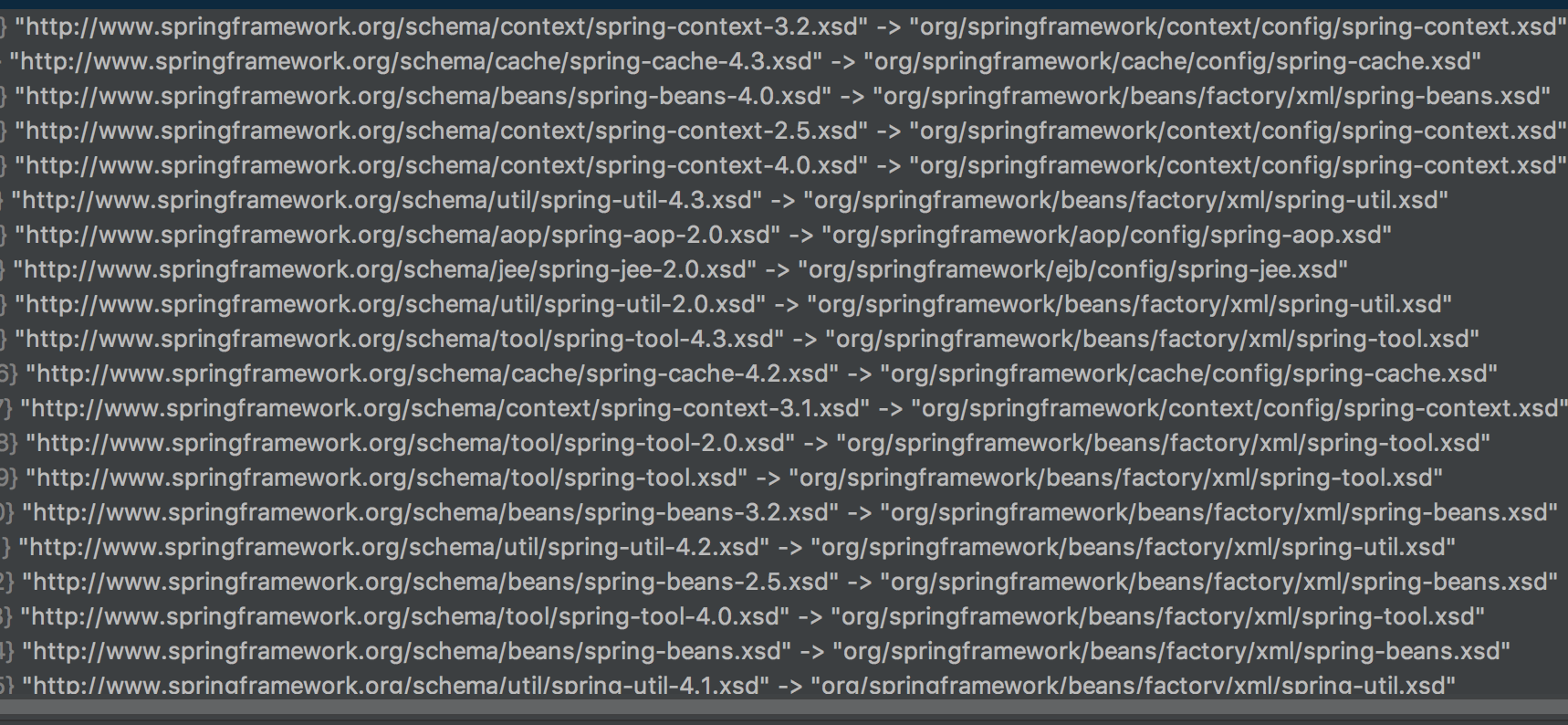<font style="color:rgb(153, 153, 153);">映射表</font>
- 然后,根据传入的 systemId 获取该 systemId 在本地的路径 resourceLocation 。
- 最后,根据 resourceLocation ,构造 InputSource 对象。
2.6 ResourceEntityResolver
ResourceEntityResolver 的解析过程,代码如下:
1
2
3
4
5
6
7
8
9
10
11
12
13
14
15
16
17
18
19
20
21
22
23
24
25
26
27
28
29
30
31
32
33
34
35
36
37
38
39
40
41
42
43
private final ResourceLoader resourceLoader;
@Override@Nullable
public InputSource resolveEntity(String publicId, @Nullable
String systemId) throws SAXException, IOException {
    // 调用父类的方法,进行解析    InputSource source =
    super.resolveEntity(publicId, systemId); // 解析失败,resourceLoader 进行解析
    if (source == null && systemId != null) {
        // 获得 resourcePath ,即
        Resource 资源地址        String resourcePath = null;
        try {
            String decodedSystemId = URLDecoder.decode(systemId, "UTF-8"); // 使用 UTF-8 ,解码 systemId            String givenUrl =
            new URL(decodedSystemId).toString(); // 转换成
            URL 字符串            // 解析文件资源的相对路径(相对于系统根路径)
            String systemRootUrl = new File("").toURI().toURL().toString(); // Try relative to resource base if currently in system root.
            if (givenUrl.startsWith(systemRootUrl)) {
                resourcePath = givenUrl.substring(systemRootUrl.length());
            }
        }
        catch (Exception ex) {
            // Typically a
            MalformedURLException or AccessControlException.
            if (logger.isDebugEnabled()) {
                logger.debug("Could not resolve XML entity [" + systemId + "] against system root URL", ex);
            } // No URL (or no resolvable
            URL) -> try relative to resource base.            resourcePath = systemId;
        }
        if (resourcePath != null) {
            if (logger.isTraceEnabled()) {
                logger.trace("Trying to locate XML entity [" + systemId + "] as resource [" + resourcePath + "]");
            } // 获得 Resource 资源
            Resource resource = this.resourceLoader.getResource(resourcePath); // 创建 InputSource 对象            source =
            new InputSource(resource.getInputStream()); // 设置
            publicId 和 systemId 属性            source.setPublicId(publicId);
            source.setSystemId(systemId);
            if (logger.isDebugEnabled()) {
                logger.debug("Found XML entity [" + systemId + "]: " + resource);
            }
        }
    }
    return source;
}
- 首先,调用父类 的方法,进行解析。
- 如果失败,使用 resourceLoader ,尝试读取 systemId 对应的 Resource 资源。
2.7 自定义 EntityResolver
老艿艿:本小节,为选读内容。
#getEntityResolver() 方法返回 EntityResolver 对象。那么怎么进行自定义 EntityResolver 呢?
If a SAX application needs to implement customized handling for external entities, it must implement this interface and register an instance with the SAX driver using the setEntityResolver method.
就是说:如果 SAX 应用程序需要实现自定义处理外部实体,则必须实现此接口,并使用 #setEntityResolver(EntityResolver entityResolver) 方法,向 SAX 驱动器注册一个 EntityResolver 实例。
示例如下:
1
2
3
4
5
6
7
8
9
10
11
12
13
14
public class MyResolver implements EntityResolver {
    @Override
    public InputSource resolveEntity(String publicId, String systemId) {
        if (systemId.equals("http://www.myhost.com/today")) {
            MyReader reader = new MyReader();
            return
            new InputSource(reader);
        }
        else {
            // use the
            default behaviour            return null;
        }
    }
}
首先,我们将 “spring-student.xml” 文件中的 XSD 声明的地址改掉,如下:
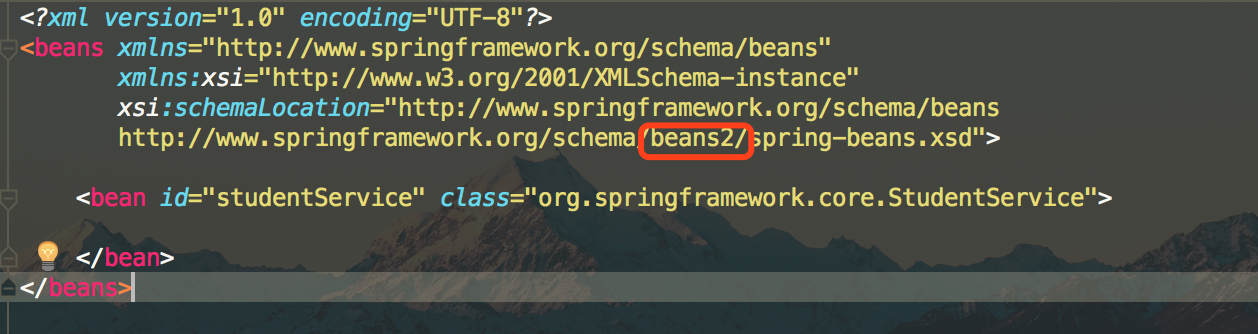
spring-student.xml
然后,如果我们再次运行,则会报如下错误:
报错
从上面的错误可以看到,是在进行文档验证时,无法根据声明找到 XSD 验证文件而导致无法进行 XML 文件验证。在 《【死磕 Spring】—— IoC 之获取验证模型》 中讲到,如果要解析一个 XML 文件,SAX 首先会读取该 XML 文档上的声明,然后根据声明去寻找相应的 DTD 定义,以便对文档进行验证。默认的加载规则是通过网络方式下载验证文件,而在实际生产环境中我们会遇到网络中断或者不可用状态,那么就应用就会因为无法下载验证文件而报错。
666. 彩蛋
是不是看到此处,有点懵逼,不是说好了分享获取 Document 对象,结果内容主要是 EntityResolver 呢?因为,从 XML 中获取 Document 对象,已经有 javax.xml 库进行解析。而 EntityResolver 的重点,是在于如何获取【验证文件】,从而验证用户写的 XML 是否通过验证。